2024 GPC Members Gathering & Spiritual Civilization Meeting - Event Report
“Humility is so important... We need to be vulnerable - not just be humble, but also to talk about things that were difficult or that we felt bad about or that we’re ashamed of. That builds trust.”
— Peggy Dulany, Synergos
When we sow the seeds of trust, we reap deeper connections and unearth possibilities of meaningful impact.
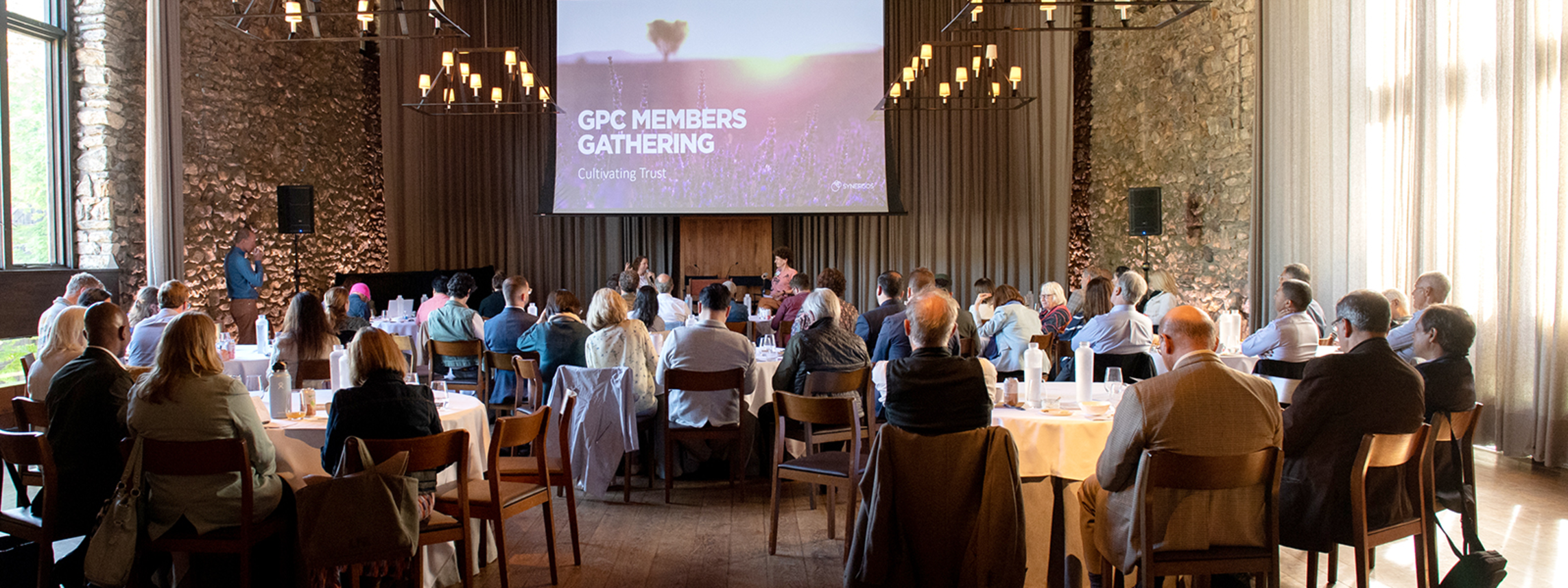
During the 2024 GPC Members Gathering and the Spiritual Civilization meeting, participants were offered an open space to share their stories and exchange perspectives on how we can restore trust in a deeply divided world, reminding us of the potential of this community when we unite in purpose. We explored dialogues between philanthropy, self-reflection, and contemplative practices, creating opportunities for philanthropists to bring inner work to outer action.
Below you will get a glimpse of the conversations and the insights that arose during our time together.
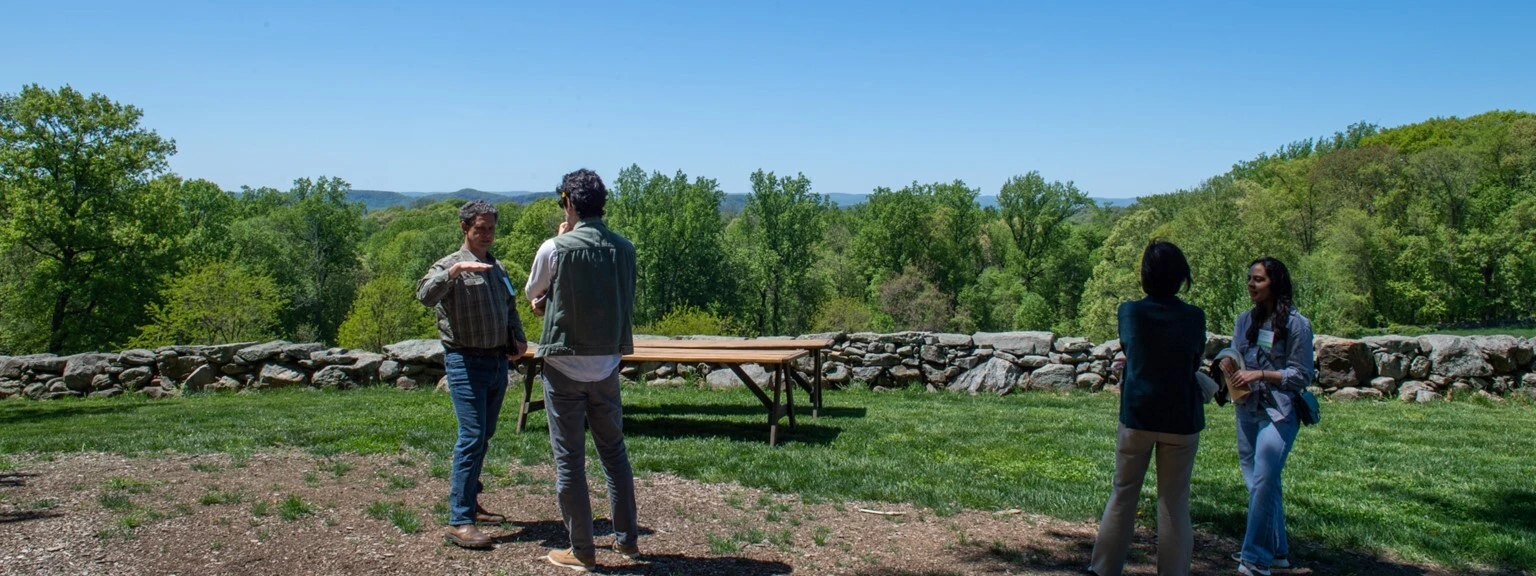
This year, our members returned to the Stone Barns Center for Food and Agriculture, a nonprofit farm and education/research center whose mission is to “catalyze an ecological food culture” - which holds a special place in the heart and family history of our founder, Peggy Dulany.
RESOURCES & LINKS
Video: Happiness - The Science of What Actually Makes You Happy
Movements and Leaders Have Seasons Blog Post
Course: Leadership and Organizational Seasons
Video: Seasons of Leadership 2023 Workshop
Video: The Creation of Unbound
Photo Gallery: Members Gathering
Photo Gallery: Spiritual Civilization Meeting
GPC May Gathering Speaker Contacts, Participants & Resources List
Martin Dunn Remarks on Inclusion, Statelessness and Philanthropy
We kicked off the first day by exploring the profound connection between happiness and community. In What Really Matters: An introduction to the science of happiness and what it means for how we should be living our lives, Neuroscientist Axel Bouchon and GPC member Ben Goldhirsh (Goldhirsh Foundation) highlighted that true happiness is often outwardly directed, rooted in making others happy rather than pursuing personal success or wins.
Evidence shows that countries where happiness is prioritized within families and communities tend to report higher levels of overall wellbeing. This perspective challenges the pervasive notion that financial success is the ultimate path to happiness - while money can alleviate stress and provide comfort, beyond a certain threshold, it does not significantly enhance life satisfaction.
The most positive brain activity you can achieve is not when you are made happy but if you are part of making someone else happy. So the whole thing is outward directed... You get so much back for yourself when you make others happy, that it actually doesn’t even make sense to focus on yourself. — Axel Bouchon, Matter Neuroscience
The discussion emphasized that genuine wellbeing is deeply intertwined with the quality of our relationships and our contributions to the broader community. In their session, Axel and Ben premiered the short film Happiness - The Science of What Actually Makes You Happy, directed by Max Joseph, which showcases the results of their study.
Wellbeing is about connection. “Where trust is built, connection is nurtured“, stated GPC member Kim Samuel during the Building connection in an era of isolation session. Participants reflected on the importance of creating a sense of belonging through meaningful and trusting relationships, which improves the quality of life of individuals and contributes to social cohesion in communities. Kim presented a unique theory of change to promote true spaces of belonging, rooted in the dimensions of people, place, power, and purpose.
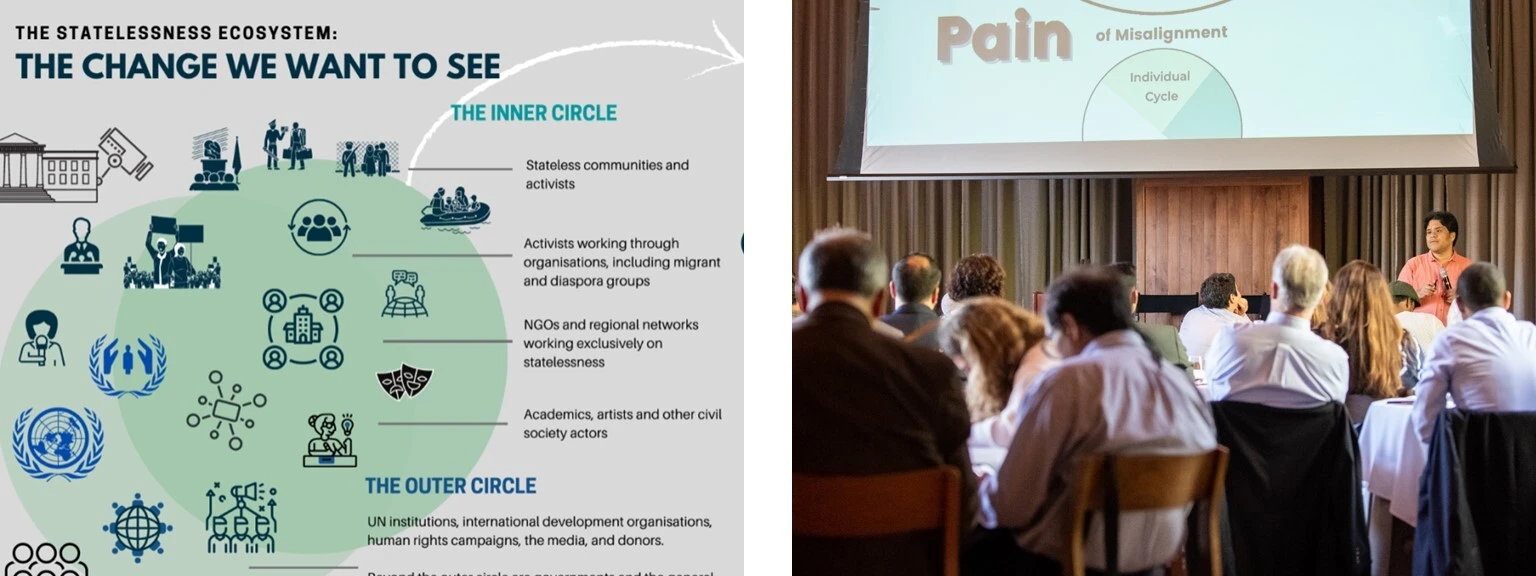
Related to the issue of belonging, another vital topic in the event was the importance of involving people affected by social and environmental issues in the decision-making process of policies and philanthropic initiatives. In the session Inclusion and Governance: The way forward, Areej Al Shammiry (Global Movement Against Statelessness) and GPC member Martin Dunn (Blue Sky Social Justice Fund) called for a paradigm shift, advocating for the inclusion of stateless people at the forefront of creating solutions. The Global Movement Against Statelessness seeks to fund, mobilize, and resource efforts to restore rights to stateless individuals, ensuring their voices are heard and their needs addressed.
Martin supports the Global Movement with a multi-year grant exempliying the trusting relationship he has with that organization and its leaders. By centering those who are directly impacted, the solutions crafted are not only more effective but also more just.
Well-intentioned funders often hinder the very people they want to win. Their goal isn’t to hinder them. [So] how do you fund if you want someone to win? Donors, like me, are used to being in charge, used to giving direction, taking leadership, dictating. To step back and not to control is not easy for funders. — Martin Dunn, Blue Sky Social Justice Fund
I find that the practice of positioning oneself in relation to the work that they do, and where they come from is an important reflective practice. It helps us understand why we’re doing what we’re doing in relationship to other people. — Areej Al Shammiry, Global Movement Against Statelessness
Speakers and participants also underscored the necessity for philanthropists to listen to and trust the communities they aim to help. Recognizing the limits of one’s knowledge and embracing the insights of those with lived experiences is fundamental in (re)-building bridges across various divides. In contrast, the current political and business landscapes are often characterized by concentrated power and widespread disconnection, particularly among young people.
Separation is the key to death. Connection is the key to life. And so we use separation in so many ways, right? When someone goes to jail and they go into solitary confinement, that’s real separation. We know separation kills. And we also know that coming together connects. — Konda Mason, Jubilee Justice
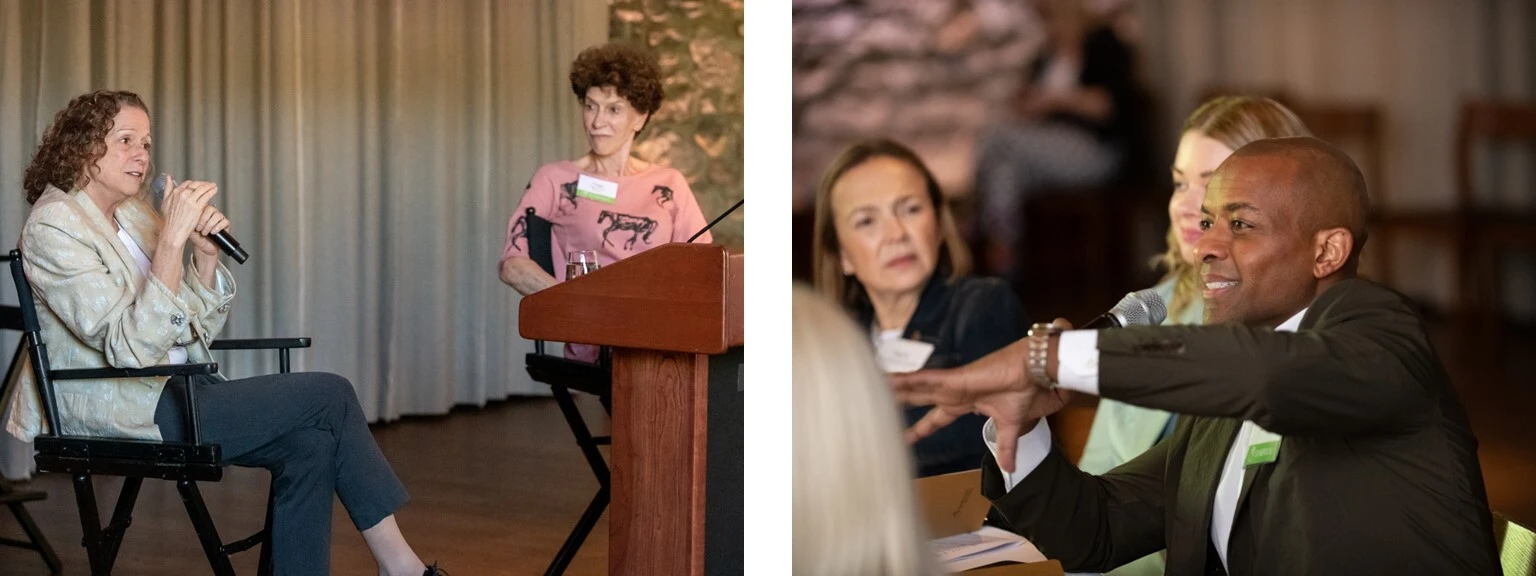
Abigail Disney, in a captivating conversation with Synergos Founder, Peggy Dulany, urged philanthropists to adopt a long-term perspective, and foster kindness and deep respect with the communities they work with.
And all I want to say to philanthropists is go slower, expect less, spend more. Especially just from the human perspective of what we’re putting staff through...We’ve got to apply what we believe about human dignity to everyone we deal with. And yes, that’s more expensive. — Abigail Disney, Daphne Foundation
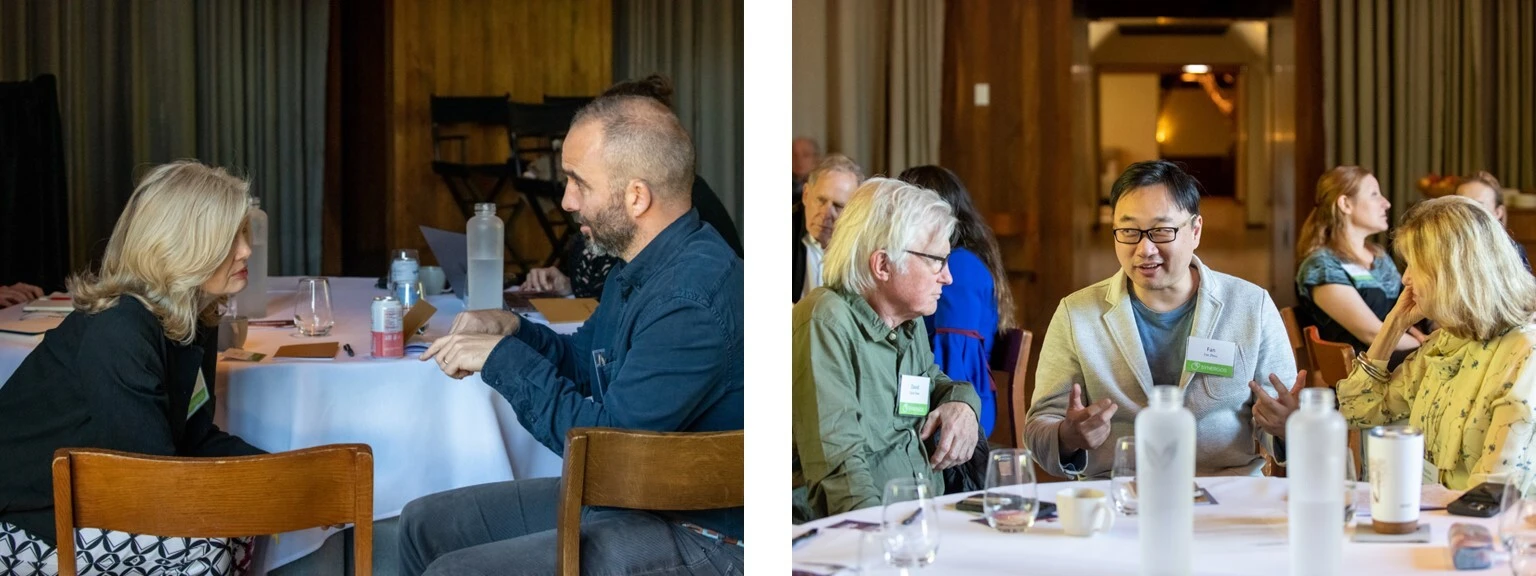
During the Movement & Leadership Seasons session, led by Chloe Cockburn (Just Impact) and Carlos Saavedra (Ayni Institute), social leadership was explored as a cyclical process, with the seasons of nature being an analogy for each phase: spring for initiating projects, summer for active implementation and outward focus, autumn for harvesting and reflecting on results, and winter for introspection and planning. Effective leadership requires recognizing and honoring these cycles, ensuring that actions are timely and appropriate to the context.
Sustaining multiple cycles of leadership is essential for individuals and communities to navigate and overcome crises. This cyclical approach also allows leaders to balance action with reflection, ensuring that strategies remain adaptive and responsive to changing circumstances.
We believe folks in philanthropy, like many of you here, are working with many cycles. Understand what season your movement is in. Because each season requires a different intervention. And money can inhibit or destroy your movement. That’s just the truth. The right things at the right time. — Carlos Saavedra, Ayni Institute
The concept of regeneration emerged as a critical theme, emphasizing the need to pause, reflect, and plan: winter season in the leadership cycle). Current global systems often operate under the illusion of an eternal summer, demanding constant productivity and resource consumption. This unsustainable approach neglects the finite nature of our resources and the human necessity for regeneration.
The system is so messed up. We produce enough food today to feed one and a half times the world’s population...yet, over 1.2 billion people go to bed hungry every night. That’s not a matter of production, but of politics. And what’s worse, 70% of those [who are] hungry are involved in agriculture. — Loren Cardeli, A Growing Culture
The discussions called for a shift towards regenerative practices, particularly in rebuilding trust in political systems and engaging young people. Regeneration involves not only environmental sustainability but also restoring social trust and cohesion, which are vital for long-term stability and progress.
As a philanthropist, you need really good systems. And there is no better system to deliver the things you need than a really good working government. — Hosh Ibrahim, Mo Ibrahim Foundation
The Members Gathering highlighted the importance of aligning with nature and honoring indigenous practices. Our relationship with the land is fundamental to our existence, and sustainable living requires moving from exploitative to regenerative interactions. Regenerative agriculture, which respects the natural cycles and the specific needs of the land and its people, was presented as a model for sustainable development.
This conversation is an invitation for us to lean into the ways in which we can restore the relationships, the art form, the connection point between land and creativity...to rewrite the story of humans being the most destructive species on the planet. — Rowen White, Sierra Seeds
By cultivating a personal and collective relationship with the land, we can foster a more harmonious and sustainable existence. Indigenous practices offer valuable insights into living in balance with nature, and integrating these practices can help address contemporary environmental challenges. In this sense, it is important that we learn from indigenous knowledge systems, which have long advocated for a symbiotic relationship with the environment.
One of the metrics that I see for what is a healthy food relationship is that you have a sense of where you’re contributing, and not just receiving, from a food system. That you’re contributing from a place of being a part of nature. That we are not objectifying ourselves in this whole thing. — Jack Algiere, Stone Barns Center for Food & Agriculture
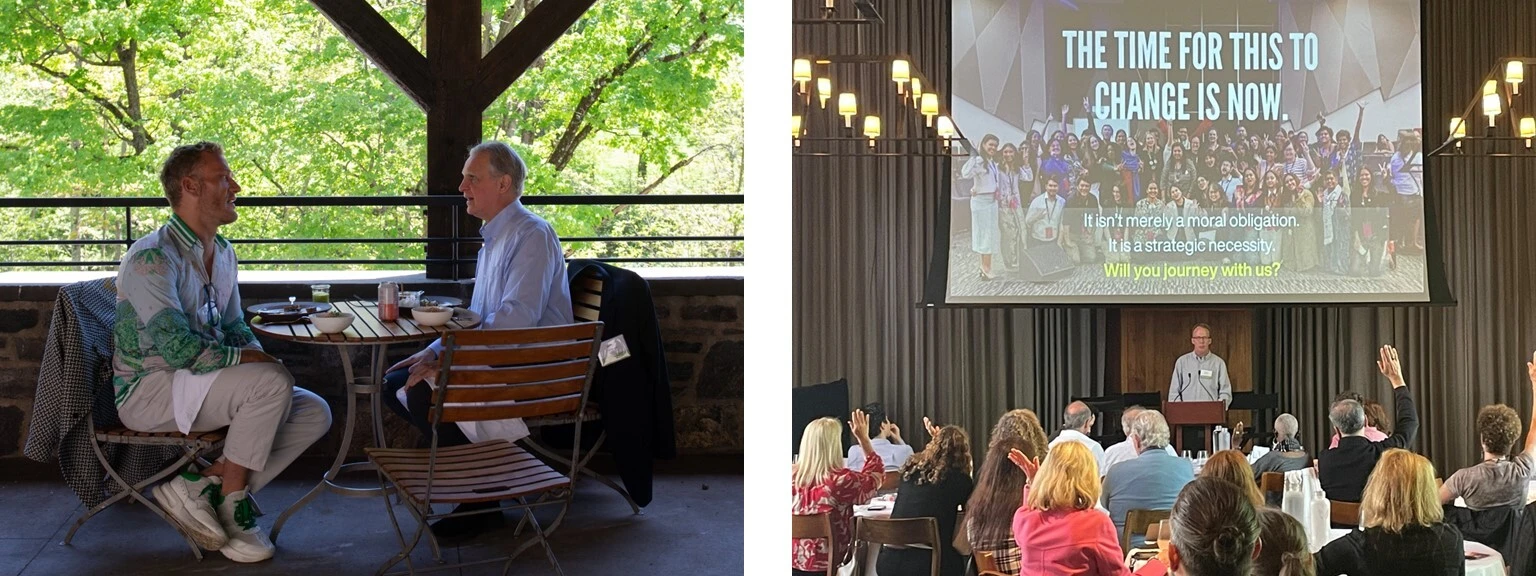
Following the two-day agenda of the GPC Members Gathering, we hosted the Spiritual Civilization Meeting, also at Stone Barns. The Spiritual Civilization Collaborative Community is an initiative from the GPC in partnership with the Fetzer Institute and Tianren Culture. The community aims to create an inclusive, global community of funders working to shape a movement to shift consciousness and bring their inner work to outer action in order to accelerate impact.
The meeting began with a short networking session followed by welcome and community updates. We shared recent milestones, highlights from our 2024 community survey and the latest Cultivate the Soul Podcast episodes. The members were asked to reflect on the two following questions: “What are the values that inspire my work?” and “How are they present in what I do?“
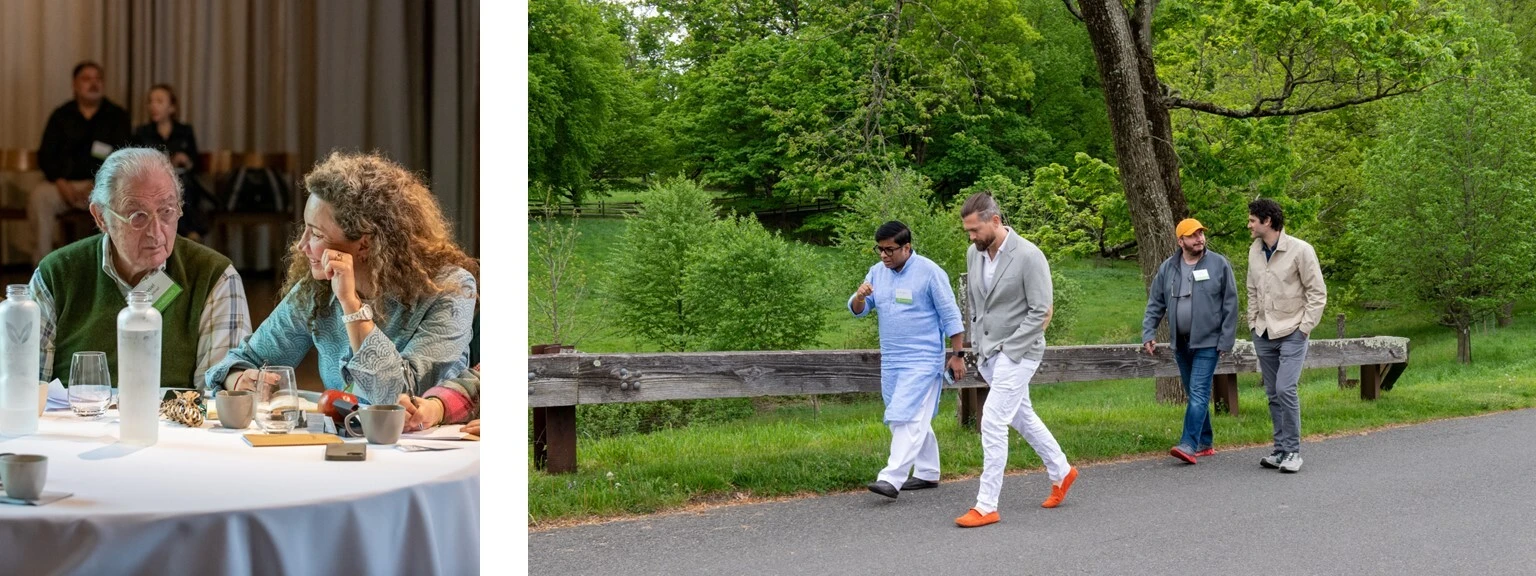
We then engaged in provocative presentations and practices, broke bread together, and took part in a reflective inner-dialogue nature walk. Ideas that were disseminated throughout the GPC Gathering continued to spread during the day - especially the concept of doing good for others as a form of stimulating one’s wellbeing.
The first session of the day, The Path to One Wisdom, was presented by Chen Ling, Executive Director at Tianren Culture. She recounted the organization’s journey from One Health: Getting to the Root Cause, to One Wisdom: Catalyzing Inner Transformation. She explained One Wisdom’s four pillars: Wisdom, Practices, Service and Community as well as their theory of change. The ultimate aim is to move from Strategic Philanthropy to Heart Philanthropy; creating social impact to providing social service; changing the world to transforming ourselves.
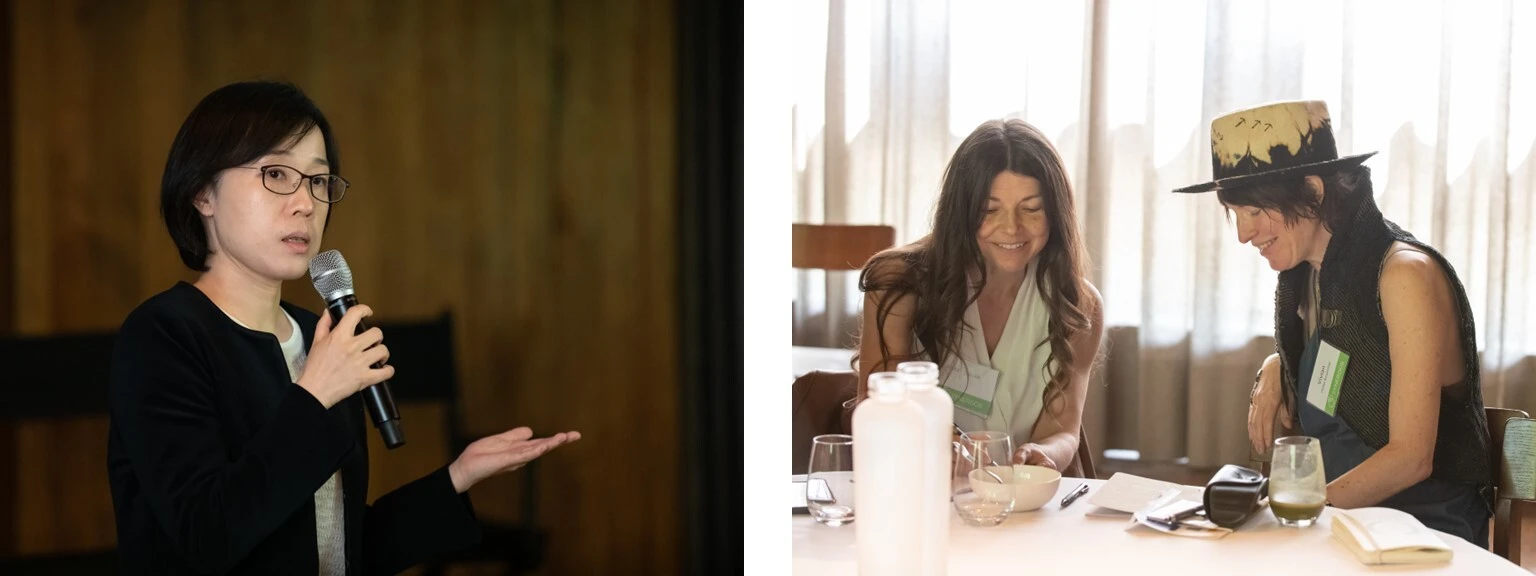
Chen highlighted Tianren’s partnership with Synergos, Stanford School of Medicine, University of California at Berkeley, and the Garrison Institute. She also shared some pilot programs that Tianren is pioneering with its collaborators, both online and offline.
The next session was presented by Vivian Rosenthal, co-founder of Frequency Breathwork. Breathwork can help us heal - mentally, emotionally, physically, and spiritually. During this practice, members had an opportunity to explore non-ordinary states of consciousness using breath to consciously release stuck and suppressed negative emotions and trauma in the body, making space for healing to occur. Tears, laughter, and unexpected feelings and emotions surfaced in this session as members moved through layers of conscious and unconscious programming, patterns, and behaviors.
After the exercise and a reflective walk in the grounds of Stone Barns, GPC member Pierre Giraud introduced ayurvedic healer Nidhi Pandya, who presented the last session of the Spiritual Civilization meeting. “There is no question about the human body, mind and even the universe that ayurveda has not been able to answer for me,” she said. Sharing how taking care of our inner climate can help us not only heal but thrive, she described how her practice has helped search for the root of suffering and correct the loss of wisdom that humankind has replaced with outside information. “The answers you seek are inside you.” Nidhi led the group in an alternate-nostril breathing exercise, which is one type of pranayama or breathing practice often used in mindfulness and relaxation methods to help calm the body and the mind.
The 2024 GPC Members Gathering and the Spiritual Civilization Meeting provided a platform for transformative discussions on wellbeing, cyclical leadership, regeneration, and sustainable practices. The insights underscore the need for a holistic approach to philanthropy, one that values inclusion, empowers affected communities, and aligns with the natural world. By embracing these principles, philanthropists can drive meaningful and lasting change, fostering a more just and equitable world.
Synergos aims to create a fertile ground for trust to flourish. We want to connect GPC members with other representatives of our community to encourage deeper conversations and systemic change.
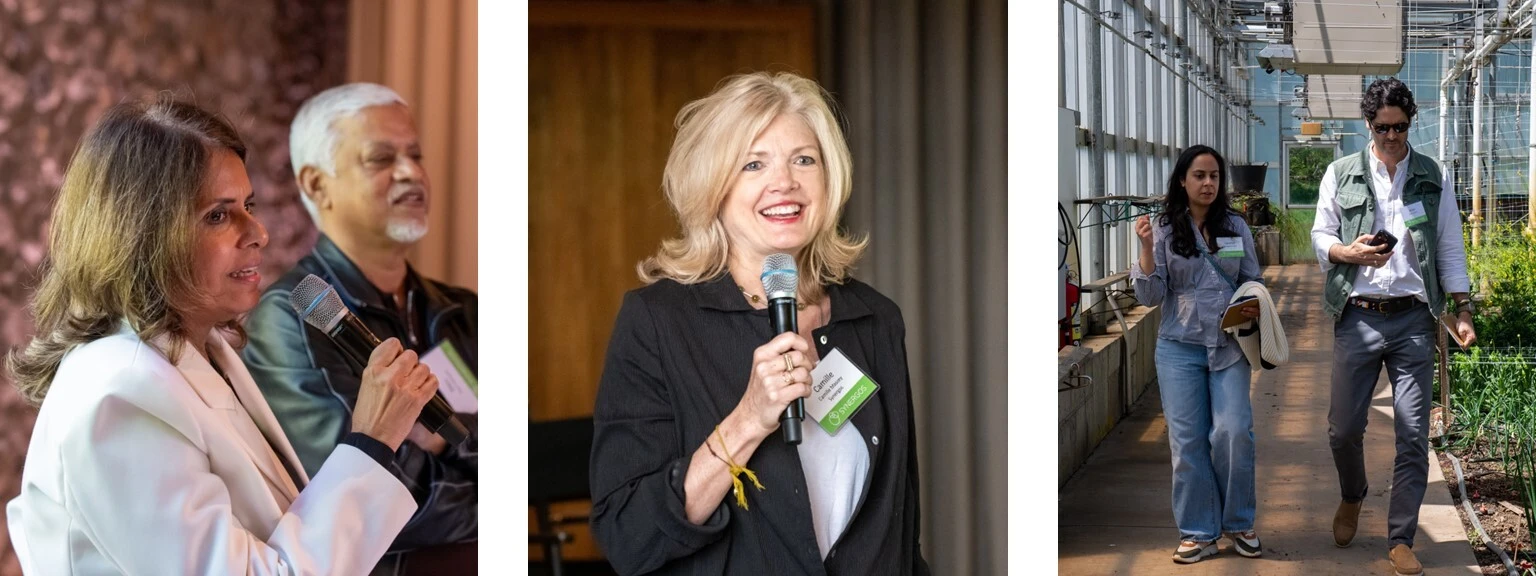
One way at Synergos that we make a difference is our growing global network. And we do that through what we call Collaborative Communities. They bring together members of our Global Philanthropists Circle, members of our team, experts, Synergos Fellows. It’s a community-centered approach. And through these Collaborative Communities, we work to make impact and share what each other’s doing in order to have impact on climate change, food systems, social justice, and other issues that I know many of us care deeply about. — Camille Massey, Synergos