
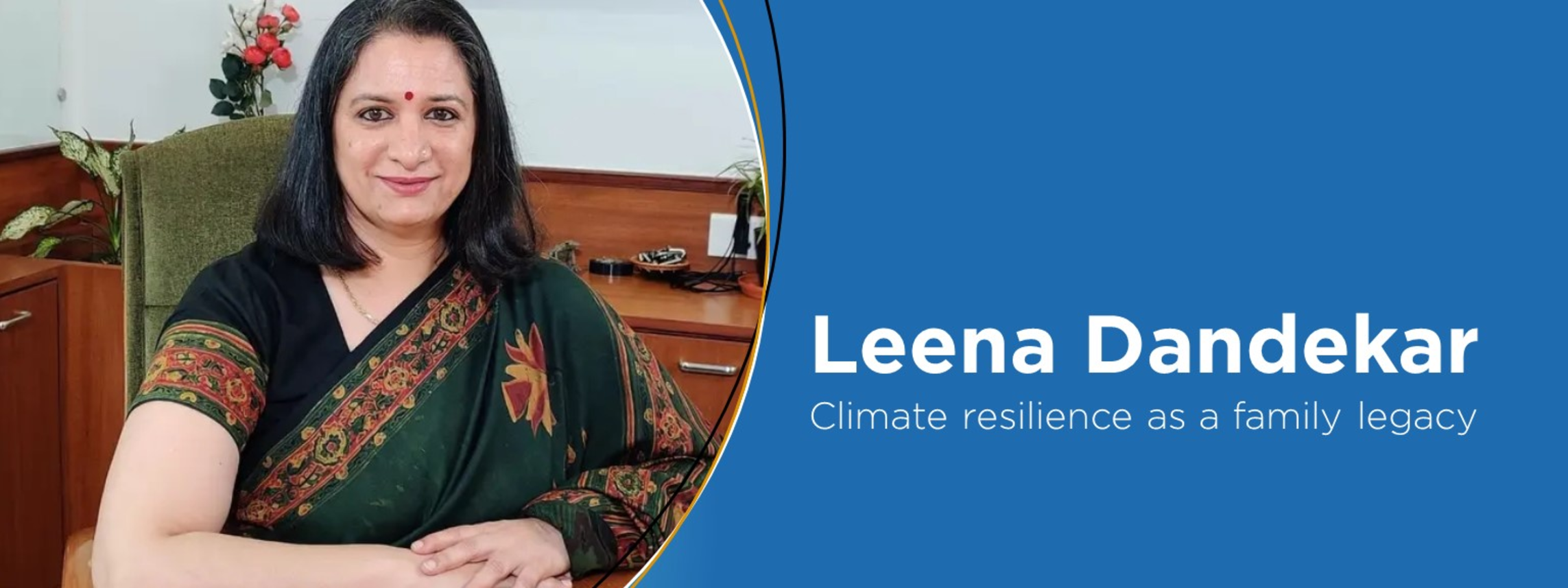
GPC Member Profile: Leena Dandekar - Climate resilience as a family legacy
Leena Dandekar is a pioneering figure in India’s impact investing landscape. She and her family have dedicated their capital, networks, and skills towards climate action, through the Raintree Family Office and the Raintree Foundation.
The Raintree Family Office was established with the objective of allocating family-owned funds in various impact and ESG assets. The focus is innovations in climate solutions that are built on sustainable and responsible consumption. The Raintree Foundation is the result of the family’s passion and unwavering commitment to bringing dignity and wellbeing to the planet and its people.
Leena talked to Synergos about her philanthropic journey, what climate action means to her, and working with her children, Abha and Vivek, who are up-and-coming social entrepreneurs.
Raintree’s background: climate action as an impact thesis
My journey with Raintree began about six or seven years ago, when we rationalized the ownership and management of our family business. Along with capital, we also inherited a legacy of strong business integrity and a credible brand. However, we needed to find a purpose to rightly invest the funds and remodel that legacy for the future by giving it a meaningful direction. With my management experience, the ability to drive networks, technologies, teams, there was a whole lot of financial and non-financial resources that we were able to mobilize. I wanted to work not only for profit, but also for purpose.
In my visits to NGOs in rural India, I came to the realization that our economic and social prosperity depend very largely on the on the prosperity of the land and its natural systems. The patterns of seasonal monsoon are changing, and so are the livelihoods of our people. Crop losses can be huge, and insurance doesn’t cover the damage that farmers suffer.
Social issues become environmental issues, and vice versa. It’s a loop that needs to be broken in a constructive and sustainable way.
I am now in my 50s, whereas my children are young and feel a lot of climate anxiety. They are well-informed about climate change and know that their future is surrounded by uncertainty. In 2050 - which is only about halfway of their lifetime - we don’t know what the weather patterns are going to be like, or if agrarian nations like ours will be able to grow food for ourselves, let alone export to the rest of the world. This scenario led our family to develop a thesis: we would work together on climate action. But what would that mean in practical terms?
Climate action is a very nebulous, all-encompassing concept, so we tried to give it more form and function: if you imagine nesting circles, climate action is the outermost circle of what we do. Within it, we look at sustainability, and circularity within that. And the smallest circle we work with is responsible consumption. That is the family’s impact thesis, all coming under the big climate action umbrella, having a critical interconnectedness.
Scaling impact investing at Raintree Family Office
After developing our impact thesis, we had an investment portfolio to create within the family office. Firstly, we decided that a third of our wealth would be allocated to investments committed to the ‘do no harm’ principle i.e. Pro-ESG (Environment, Social and Governance). This meant there were initiatives in which we did not invest, no matter how financially attractive they were, if they caused any kind of damage to the environment or to people in it.
But we wanted to go a step further. Climate action is not just about doing no harm, but also creating positive impact. Six years later, we have deployed 30% of our capital into impactful initiatives.
And then we said, ‘What can we do next? Can we push this 30% to 50% or more over the next 10 years?’ And as our portfolio grows, the increase in this allocation will come from a family office that we are setting up overseas to look at impact opportunities globally. So, in addition to the money already invested in India, we will reallocate further capital from a conventional portfolio into impact investing.
That’s the way forward for the family, keeping the same thesis of climate action and the nesting circles as our guiding principles.
Going beyond: climate resilience for living landscapes
After making this substantial change to the family’s investment portfolio, we saw that we could move beyond impact investing. Established in 2018, the Raintree Foundation, the philanthropic arm of our family office, was the way we found to promote impact more actively and on a bigger scale. We wanted to focus on our country and try to make a change for people who really need it, those with less safety nets than us. This is how Raintree’s philanthropic model was born - we call it ‘climate resilience for living landscapes.’
When you think about climate action, you realize that everything in nature is interrelated. There is no part of nature which stands alone. This is especially true in densely populated countries like India, where you find people in settlements, villages, and towns all around the territory. It is impossible to separate human beings from the natural ecosystem. So, our philanthropic model is based on living landscapes because we consider all aspects of the territory.
All landscapes have their unique physical features - mountains, rivers, soil, rocks - which are nonliving. Its living parts, on the other hand, are its biodiversity (flora and fauna) and the local communities. From this vision we classified the three primary stakeholder groups in our program: communities, biodiversity, and the natural systems of the landscape. We are trying to build climate resilience for all of those. This means keeping the environment & the surrounding ecosystem stable and strong enough to endure climate shocks for the next 40 to 50 years.
The Raintree Foundation: a listening organization
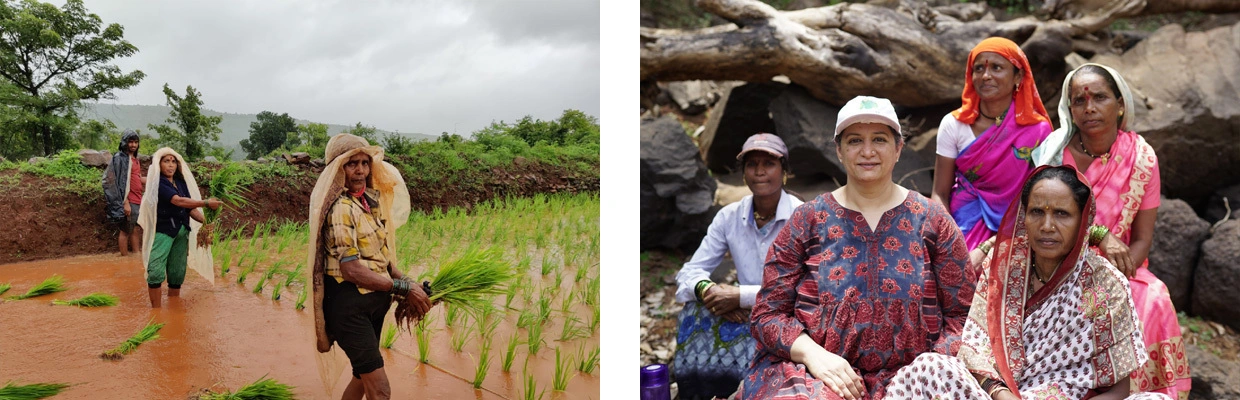
Our methodology is very data-driven: we collect data from the land, the rocks are surveyed, all the water bodies are mapped, an entire study of the landscape is done. This generates a lot of information about the territory, which serves as the base for required interventions. The land speaks for itself, we just listen.
Water is a crucial element in Raintree’s mission to restore natural ecosystems - reviving springs, preventing erosion to make sure that the soil can hold more water, and so on. Biodiversity conservation is another big part of building ecosystem resilience. Any landscape without life forms is just scenery. That is why we protect endemic species and promote the restoration of forests and grasslands. We do everything to restore that biodiversity to the extent possible.
The Raintree Foundation also puts effort into improving livelihoods in India’s rural environment. Because of climate change and crop losses, people migrate to cities - often for jobs with no security or dignity. To mitigate this pattern, we try to build means of subsistence, promoting micro enterprises and skill development so people don’t have to leave their homes and can still prosper. It’s an incubation initiative for communities to be able to come up with entrepreneurial ideas and thrive.
This is also aligned with the trend of people from young generations seeking self-employment. We listen to their aspirations and provide training, mentoring, and access to capital, trying out different models where entrepreneurship can be seeded.
The Foundation is now in its sixth year, and even with a two-year setback due to the covid-19 pandemic we have already seen remarkable results. Our pilot project was laid out for 10 years and we are now planning the exit for that pilot, since later this year we will launch a much larger project, covering 2,200 square kilometers of a river delta in Western India. There are four or five urban townships in the region, around 400 villages, and a population of over 350,000. It’s a huge leap from where we are, and we have started looking at fundraising partnerships.
A holistic approach to resilience
When we talk about climate resilience, we need to embrace all aspects of the environment, and of course that includes its people. It’s fundamental to ensure communities are not just self-sufficient financially but also resilient from a mental health perspective. Hence, the Raintree Foundation has developed a strong mental health program for people in situations of vulnerability.
Our goal is for the community to be custodians of the natural environment and drive climate resilience which is only possible if the people are resilient enough. By fostering community institutions and transferring responsibilities gradually, we want to ensure the sustainability of our efforts beyond our direct involvement in the territory.
In short, our approach to building ‘climate resilience for living landscapes’ is threefold: it encompasses community wellbeing, wellbeing of biodiversity, and wellbeing of the natural systems of the land.
Family matters
In India, we all live together, even though my children are grown up. Our dinner table conversations led to my growing awareness and sensitization about people from different backgrounds. I’m a very urban person and our family was ‘well heeled’, so I did not really have a sense of the reality of my compatriots outside urban areas and how their lives were like. Then, influenced by my daughter and my son, I stepped out and began pursuing this cause.
Our background and lack of external pressure on our capital provides us with the opportunity of working patiently towards long-term impact. This allows us to focus on the root causes and not just the problems arising out of them. My children, in their early 20s at the time, were convinced about this plan. I, however, wasn’t sure if they understood the responsibility involved and the timeline of this project given their age. You know, people change very rapidly at that age. What is a person who is 20 today going to think about their career when they are 30? How will their world view develop? But I knew that the opportunity we had was unique: to work together as a family, potentially for decades. So, we had many discussions and sought external advice to ensure their commitment.
The whole climate resilience thesis came from their worries about the current state of the planet. They are very knowledgeable, so they are aware of the privileged position we are in and how much the climate crisis affects people who are India’s major work force - those who work to provide us our food and our basic needs.
Today, I feel very blessed that they are sensible and committed to this cause.
My daughter Abha leads Human Resources at Raintree, and she gives a lot of attention to mental health as a resilience measure. This concern has also evolved into a for-profit initiative she is now incubating, which focuses on mental health at the workplace. Like my son Vivek, she is on Raintree’s board. We also have quarterly strategy meetings to discuss the investments of the family office as well as the foundation.
What differentiates our family from others is our corporate thought process. We are very formal in the way we work with each other. Unlike other families where roles are blended, we keep personal and professional matters separate. Establishing this dynamic was a challenging but rewarding process. While Vivek and I are more similar, me and Abha are essentially very different people. To work together on Raintree, we took counseling support, learned how to communicate and to set boundaries. Our relationship has never been better, we can talk about everything now. It has been a good journey. We are closer as a family because we have a common passion and purpose. We wholeheartedly believe in what we do, and that ties us together.
The message I am trying to convey is that every family can work together if they decide to do it. Of course, it’s not easy- you need to unlearn many behaviors and learn new ones. But it’s worth it.
If I were to offer advice to families of philanthropists, I would suggest seeking external help or mediation to navigate intergenerational dynamics. At the end of the day, careers come and go, but family is everything. Working together in a shared cause can be extremely fulfilling if you listen to each other.
Success stories and learnings from the field
Both the Raintree Family Office and Raintree Foundation have an intersectional approach. We see societal and natural systems as interconnected, so we aim to create a balance between them. Moments that show us we are on the right path make us proud and confident in our mission.
For instance, we’ve been doing forest fire training sessions for five years in rural India, and last year, for the first time, we had volunteers from one of the villages go out and stop the fires. They shared videos of them rescuing birds in the grasslands, where they were nesting. The villagers were holding birds in their hands and keeping them safe, like real custodians of their environment.
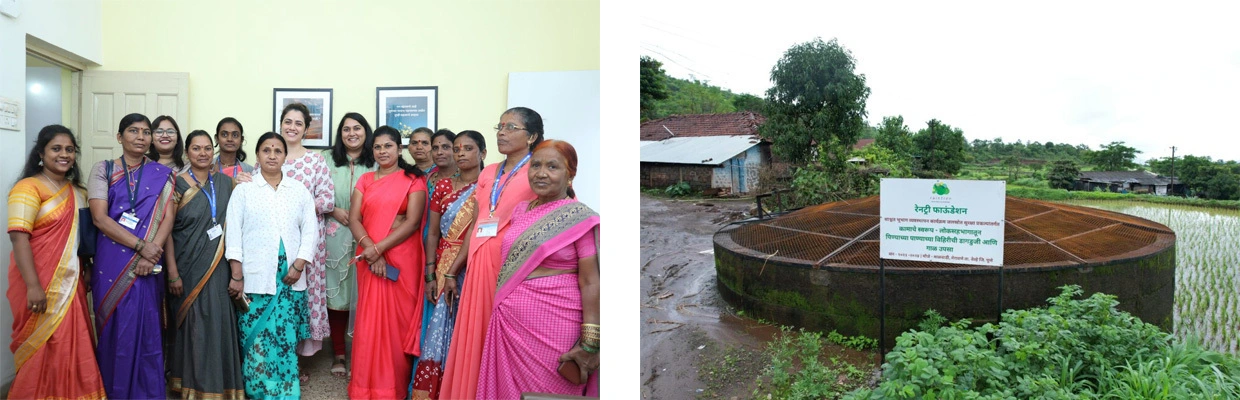
Also, we have successfully restored an eroded lake, removing all silt from it. This led to revival of the water body, allowing biodiversity to flourish. We found wild boar footprints - that means animals are coming there to drink water. We have camera setups showing pangolins and leopards going there too. If we can have a part in keeping them safe, and in their rightful place, then I think it’s a job well done.
Another success story is related to our initiatives promoting mental health. After three to four years of awareness sessions about concepts like stress, anxiety, etc., we now have counseling centers in the villages. Early on, only the youth used to be open about their issues as its still considered a taboo subject, more so in non-urban Gradually, women started voicing out their concerns too which was a massive feat for us given the prevalent gender dynamics.
Finally, in a society where men think they’re infallible, we had those who started coming into these centers saying, ‘I need help.’ There was one man who had reverse migrated from the city back to the village, because of drinking problems and wanted support. Now, he is taking regular counseling and medication for his alcoholism and rebuilding his life.
In a sector obsessed with metrics of numbers of people impacted, I know these examples don’t seem much. But I think every life touched is important. So far, the Raintree Foundation’s numbers are small, because this is just a pilot project, but it has given us the required validation of the model we have developed. We expect to make a much larger impact in the new geography planned. There is still a lot to learn from the field, from nature and from the people.
We began with some assumptions on the needs of the community but soon realized the actual on-ground needs that had to be addressed. We ran surveys very early on, and surprisingly, women from the community asked for yoga classes. They wanted a park and a gym where they could exercise. What they actually needed was something for their spirit and their soul. They wanted a place to just sit with each other, where they could walk, exercise and bond as a community.
I say this all the time - we need to be a listening organization. We need to listen to the land and to the communities. So, all we try to do is listen and then decide what to do.