
Philanthropy in the Age of AI: A Conversation With Jonathan Evens
We had the pleasure of interviewing Jonathan Evens, a next-generation philanthropist and AI trailblazer who’s helping shape the future of technology, with a deep respect for the past.
You might already know Jonathan from Synergos’ series of events about AI and Philanthropy, where he was a co-curator of three online sessions exploring emerging trends, ethical challenges, and the opportunities AI presents to shape a more just and inclusive future.
Jonathan’s journey with AI began not in a lab, but in his home, as a curious teenager browsing the web on his computer noticing how YouTube’s recommendations seemed to read his mind. It was one of those quiet moments of realization: algorithms were already making decisions on our behalf—and their creators might not fully understand how or why. That early sense of wonder (and concern) sparked an interest in the power, promise, and complexity of artificial intelligence.
Today, Jonathan leads product at Google DeepMind, where he’s focused on transforming Google Search with cutting-edge AI features. But Jonathan isn’t just passionate about what AI can do, he’s deeply invested in how it’s done.
It’s inspiring to see how he has been working to bridge two worlds: the fast-evolving tech ecosystem, and the mission-driven landscape of philanthropy. He believes philanthropy has a vital role to play in shaping how AI develops—by asking the hard questions, testing bold ideas, and staying grounded in human values.
He brings this same vision to his work with the Evens Foundation, a family institution now in its third generation. Founded in the wake of WWII, the Foundation has evolved under Jonathan’s and his sister’s leadership to focus on democratic resilience in a digital age.
Whether he’s talking about “synthetic citizenries” or the “Tinder of Politics”, Jonathan invites us to think differently—not just about the future of technology, but about our shared responsibilities in shaping it.
Have a good read!
Synergos: Do you recall your first meaningful encounter with AI – and what struck you most at the time?
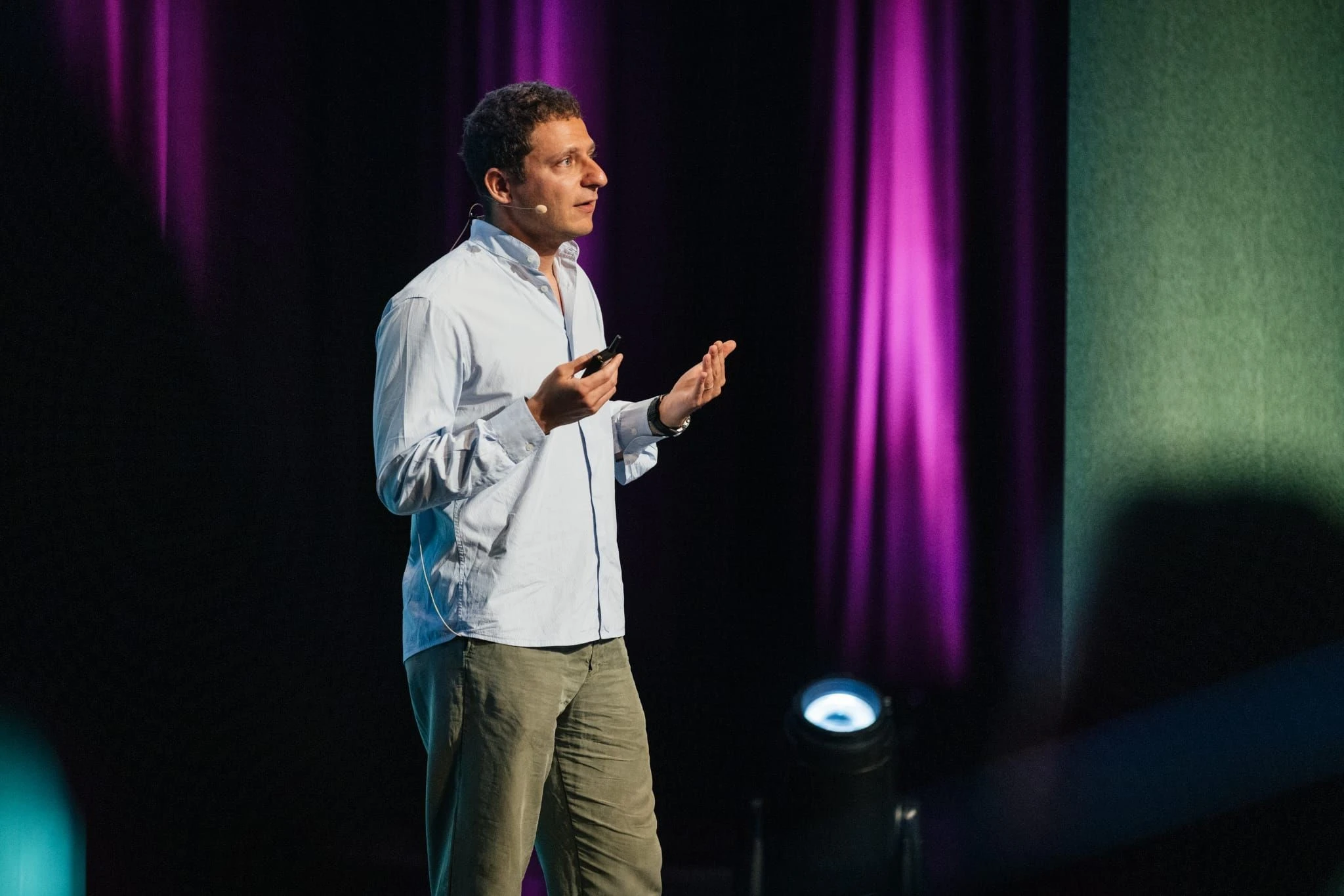
Jonathan: I was still a student in the early 2010s, searching for educational content on YouTube on my computer. I noted that the recommended videos on the YouTube homepage were almost always relevant to me. I figured it wasn’t humans behind the screen selecting content for me, but rather an algorithm that made choices on its own. The creators had delegated decision making to their algorithm, but did they understand it beyond the few key metrics they cared about? That moment was profound for me: machines, what we now call Artificial Intelligence, were beginning to make decisions without their creators having full control over the outcome.
You’ve worked across a wide range of AI applications. What has drawn you to such diverse areas, and how do you choose where to focus your energy?
I was always drawn to using technology (across computer science, AI, and physics) to disrupt industries and solve meaningful problems. As a student, I was worried about human-made climate change and sustainability. Beyond Tesla working on replacing the internal combustion engine, I thought the utilities weren’t doing enough. I worked at AutoGrid Systems for a few years to build out the Smart Grid [modernized electricity networks using digital tech to optimize energy use].
By the end of my time there, I thought the industry was on the right path, at least technologically speaking, so I moved on to another challenge: Earth observation for an integrated aerospace and data company, called Planet. This was the first company to build out a constellation of over a hundred satellites and they were looking for someone to build their insights product using the latest deep learning techniques, with applications for forest preservation, agriculture, mapping and defense.
Now I'm at Google DeepMind, where I focus on transforming Google Search, a product I grew up with since I’m a teenager! If you have used AI Overviews or AI Mode recently on Google, you’ll know who to thank—or blame.
You’ve been curating an AI and Philanthropy series with Synergos – what conversations or insights have stood out to you the most?
It was really fun, thank you for putting it together! I enjoyed having open discussions with other AI practitioners in the context of philanthropy.
One key insight is the urgency to get this technology right and embed democratic representation into its development, as Aviv Ovadya at the AI & Democracy Foundation argues. We had over 200 years after the printing press to manage the fallout that the communication revolution ushered in. For the AI revolution, we have maybe 20 years, so a fraction of the time.
Another insight is the importance of Philanthropy quickly developing expertise in Artificial Intelligence and building out applications to advance their missions (see the session on the handbook of AI and Philanthropy with Milos Maricic and their new institute, AIPI). AI can be used to support grant applications (e.g. verbal submissions), assist with grant assessments, and is quite good at ranking documents based on specific criteria. It’s also good for Monitoring, Evaluation, and Learning. You can ask grantees for a structured oral report rather than a written one, captured by AI, which then plugs in the relevant data into your monitoring systems. But questions remain: when is it appropriate, and where do we need a human in the loop? These debates will shape philanthropy in the years ahead.
Finally, as a society, we have totally failed to harness “baby AI” (i.e., social media algorithms) and with Large Language Models, we now have much more capable, more generalizable ‘intelligence.’ We need to think through how to design our interaction with this technology in a way that is aligned with our values and not fail again (see session from Center for Humane Technology).
How do you see AI influencing the way philanthropic families – especially younger generations – think about impact and responsibility?
Younger generations are using AI tools like ChatGPT, Lovable, and Cursor, and are more open to experimentation. Still, we’re in the early days of AI’s commercial application. One has to realize that Artificial Intelligence is creating a platform shift, just like the internet did. Usually, philanthropy lags behind commercial. I would urge younger generations to rethink their missions and operations in two ways:
First, how can AI transform how they operate to achieve their mission. Imagine it’s the pre-internet age, what would a successful transition in the internet age look like? Now, keep that mindset and envision what a similar successful transition would look like in the AI age.
Second, is the development of AI going to impact your ability to deliver on your mission? If so, could you be part of the development of AI in a way that benefits your mission? You could, for example, sign up to be a trusted tester of the top AI labs, work with partners to educate yourself (e.g., AIPI from Milos Maricic).
The Evens Foundation’s leadership is now in its third generation. How has its scope and goals changed over time?
Founded on the principle of “never again” after the horrors of World War II which led to a European suicide, the Evens Foundation’s mission was always to promote living in harmony in Europe. My grandfather Georges Evens and my grandmother Irene Evens-Radzyminska, shared a commitment to the European project as a vision for unity and solidarity over division. My mother Corinne Evens led our family foundation and expanded its focus to education, intercultural dialogue and tackling racism and xenophobia.
With my sister Deborah Flon and myself, given the current state of Europe and the world, we have refocused on fostering democratic resilience in an era of rapid technological and societal change. We believe in democracy’s core promise: government for and by the people, and an unwavering commitment to the rule of law. As European democracy is struggling to keep pace, young people are losing trust in its institutions, while public discourse, political participation, and civic engagement are being reshaped in ways that threaten its future. To meet this challenge, we are investing in digital initiatives, critical thinking, education, and innovative civic participation—online and offline. Our goal is to contribute to evolving democracy in the new digital & AI era.
What are you most energized about as the Evens Foundation looks to the future?
There are a few projects in the works right now that are especially exciting. The first one is about scaling citizens’ assemblies with AI to make small, local citizens’ assemblies more accessible and impactful. Philanthropy must be an enabler of democratic innovation.
We are also working on Decision-Making tools enabled by AI for politicians to make more informed decisions, with “synthetic citizenries” to provide safe, AI-powered environments for testing political ideas. Another project is a “Tinder of Politics”, an application designed for young people by young people, aiming to boost electoral participation and will likely become a political companion.
Finally, we are looking at how EU digital policy can enable better recommender systems algorithms by funding advocacy for user-controlled algorithms to counter harmful market-only incentives. All of these projects are done in collaboration with others, so feel free to reach out should any of them pique your interest.
How did your connection with Synergos and the GPC begin, and what has it meant for your work and perspective as a philanthropist?
My mother has been part of Synergos and GPC for quite a while and I had met Peggy as a teenager in our home in Paris, I still remember our encounter! I decided to get more involved in the past year as my mother passed on the chairmanship of our foundation to my sister and I.
Given my background in AI, I thought I would help curate a series on AI & Philanthropy with the GPC team, and raise awareness of the problems we are facing with development of this technology.
Specifically, when it comes to our foundation’s mission, I believe AI and Democracy need to work in sync and need to co-evolve. In my last panel discussion at the event in New York in May, I found Synergos and GPC members to be very excited to contribute and participate in this space and I would love to continue the conversation, share learnings and make it a core part of what GPC, Synergos and its members are focused on.
Rapid Fire Questions
- What is your most cherished memory? Over a year ago, my wife gave birth to our second child. Our older daughter came into the hospital bedroom to meet her newborn brother and asked "where is my baby?" and couldn't stop hugging him. No memory will ever beat this one!
- What valuable lesson did you learn the hard way? You are in this world to live your own life, not someone else's.
- What question do you wish people asked you more frequently? The fifth "why", you can always go deeper in your understanding of the world; too often we stop at the surface.
- Do you have any regrets that stand out in your journey? No regrets, I try to focus on what I can change. That being said, I sometimes wonder if I would have liked the career path of becoming a mathematician.
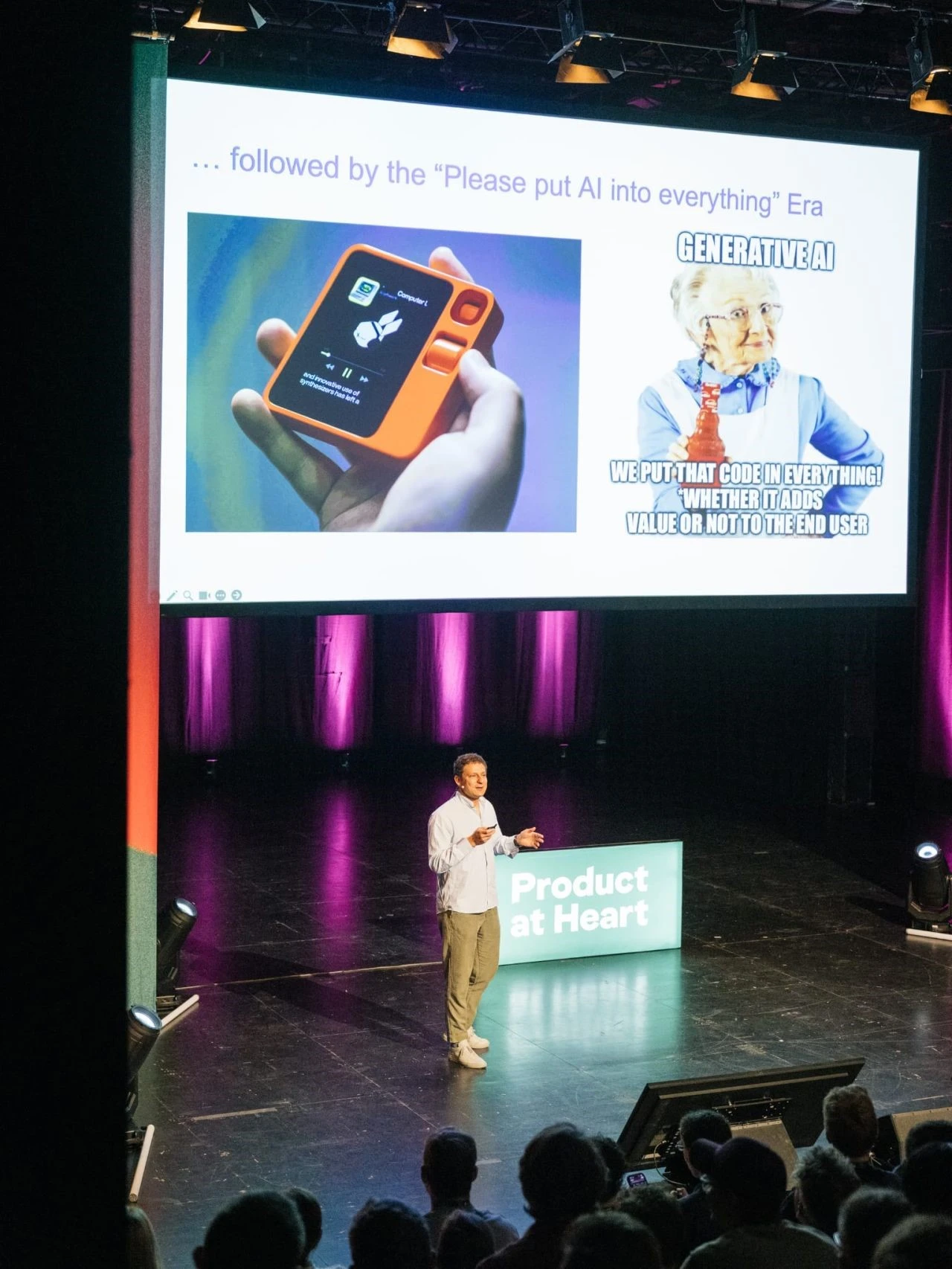
Photos courtesy of Jonathan Evens.