
Reflections from the Skoll World Forum
By Juliet Valdinger, Synergos Philanthropy Partner for Europe
Last week at the Skoll World Forum 2026, I was reminded again why spaces like this matter so much. They create room to step outside our daily tasks (which are often carried out on autopilot), listen more carefully, challenge assumptions and reconnect with the deeper purpose behind the work we do.
The conversations were wide-ranging, from planetary health and community-led development to digital safety, climate, collaboration and the role of youth leadership. These were recurring themes that stood out to me:
The power of advocacy
One of the strongest reflections for me was around the role philanthropy could be playing in advocacy, and often still does not. Too often, philanthropy remains quietly focused on its own activity, funding good work but stopping short of using its influence to challenge the systems that create the problems in the first place. There is an opportunity, and perhaps a responsibility, for philanthropy to be bolder. Not simply to fund change, but to advocate for it. To press governments, institutions and wider systems to raise their game.
How we scale impact without losing integrity
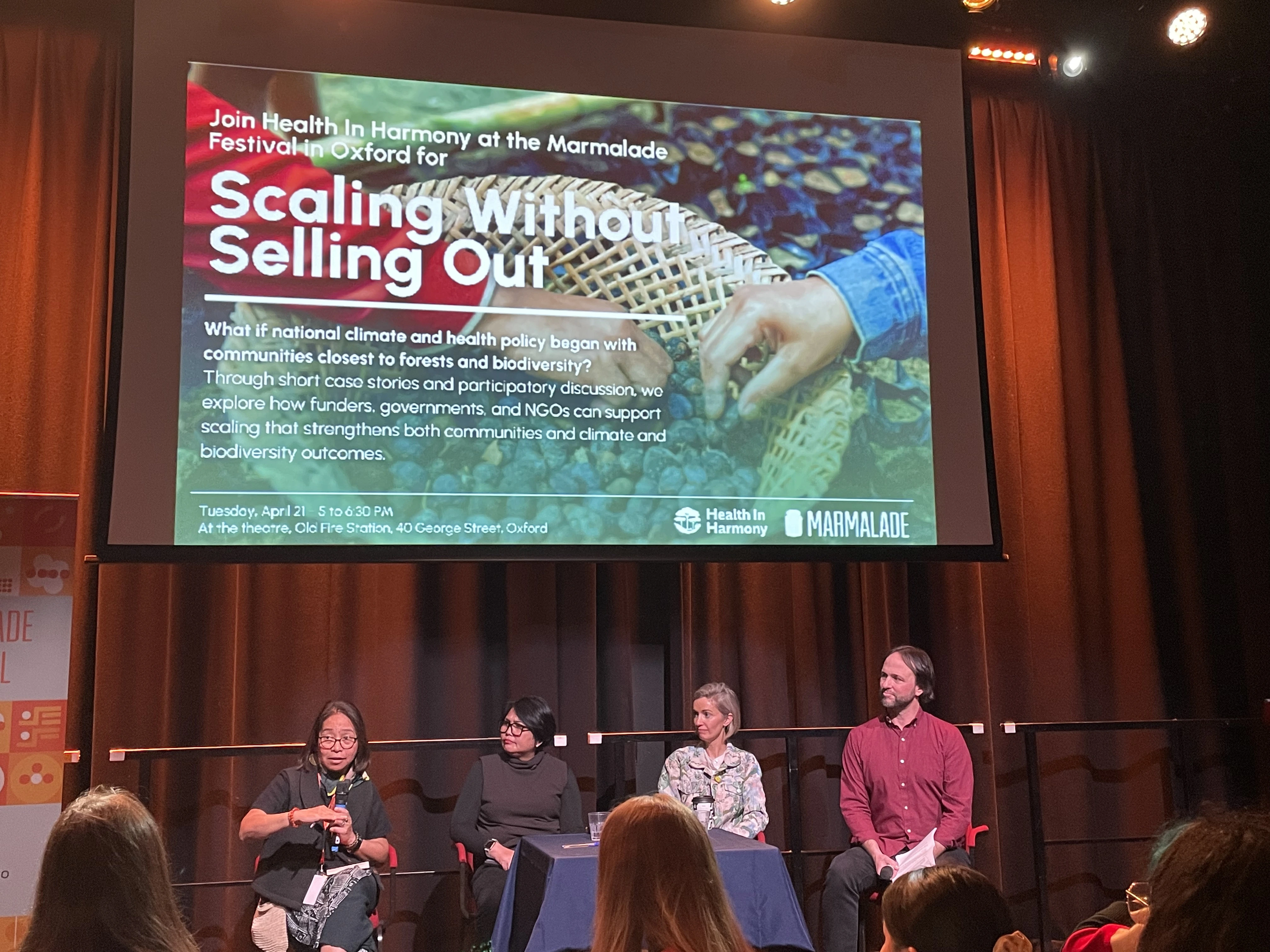
The question of how to scale-up without selling-out came up repeatedly. The answer was refreshingly simple, though never easy: to ‘radically listen’ to communities. Communities already hold the solutions. Too often, external organisations arrive with expertise, language and funding, but without the humility to listen first. Real scale does not come from replication alone. It comes from relevance. Language matters here too. The observation that we should shift from thinking about “beneficiaries” to thinking about “implementers” was very powerful. The word beneficiary can unintentionally create distance and hierarchy. It suggests passivity. In reality, the people closest to the challenge are often those best placed to shape the solution. This was especially powerful in discussions around self-agency. We must work with people in ways that help them see themselves not as victims of circumstance, but as people with the ability to design and control change. The role of external support should be to strengthen confidence, capability and access, not to reinforce helplessness. Invigorating self-agency is far more sustainable than delivering dependency.
Partnerships, collaboration and collective action
Partnerships were discussed not as a nice addition, but as a necessity. They unlock efficiencies, bring depth and prevent organisations from trying to solve complex issues in isolation. But collaboration itself is complex and costly. It requires time, trust and deliberate investment. Funders need to understand that if they want collaboration, they must be willing to fund it, both within their own work and for the organisations they support. Too often, donors unintentionally create competition where collaboration is needed most. Organisations are made to compete against each other for limited resources, rather than being supported to work together around shared goals. If we are serious about systems change, we have to move away from this model.
One of the most transformative sessions I attended was led through GPC members, the Shibulal family, beautifully facilitated by Neeraj Doddamane, Chief Strategy Officer at Shikshalokam and supported by ourselves and the Schwab Foundation. The discussion focused on the realities of funding collective action and what is required for it to succeed. The insightful discourse was about how we can build a stronger understanding between funders and frontline leaders, helping to foster not only collaborative, but also considered, approaches to advancing collective social innovation.
Data and Technology
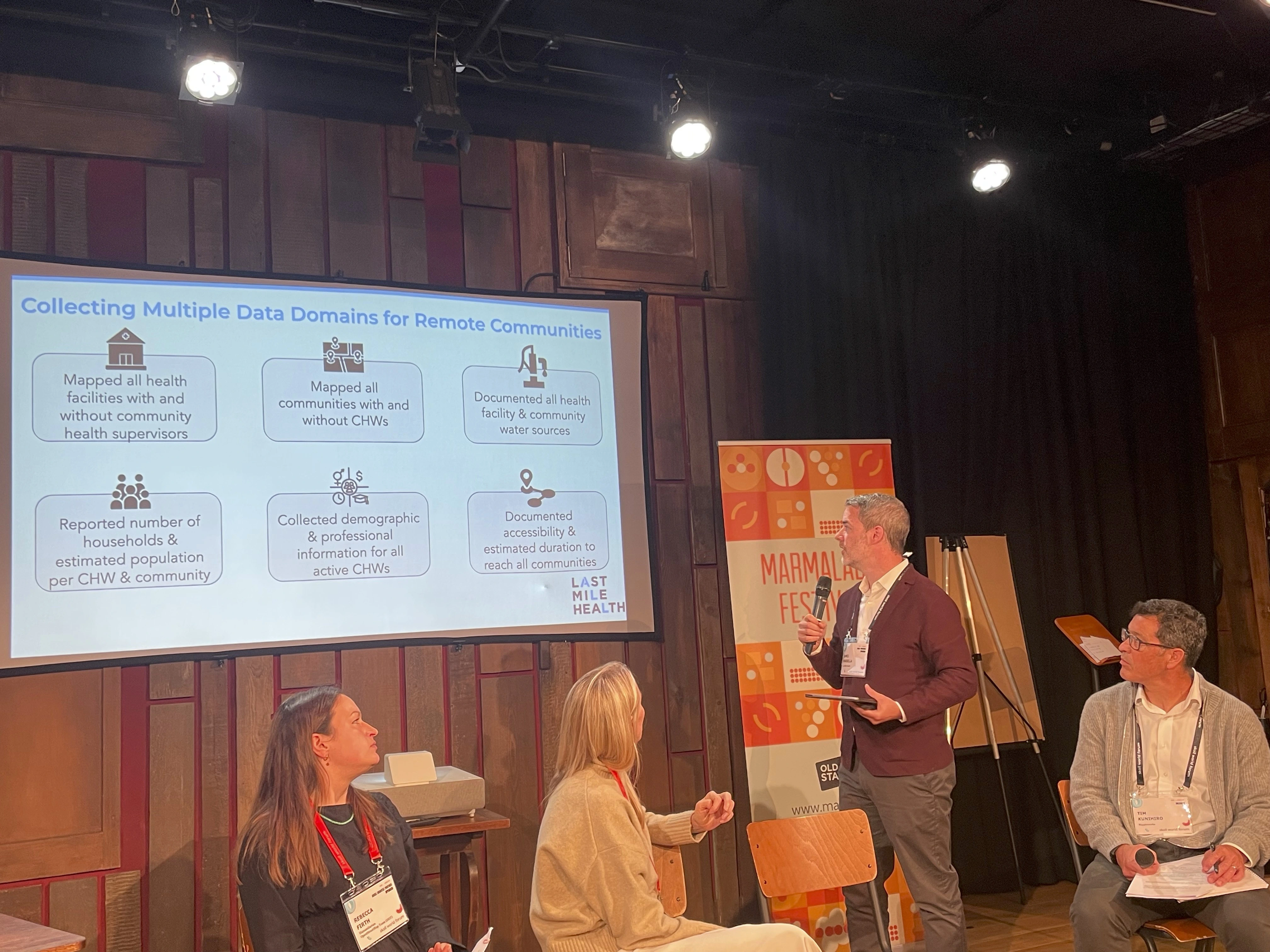
There were also important reflections on data and technology. Technology can be an extraordinary tool for strengthening community health systems, improving access to primary care, protecting children and gathering critical information about people living in informal settlements who are too often invisible to formal systems. One particularly sobering conversation focused on child protection in the digital age. During Covid, the number of child abuse images increased dramatically, and the issue is no longer confined to a small or hidden group. The scale is broader and more urgent than many people realise. What stayed with me most was the reminder that trust between parents and children is often more powerful than any safety feature built into an app. Technology can help, but relationships protect. Helping children understand how grooming happens, why exploitation occurs and what these manipulative systems are designed to do is far more effective than relying solely on digital safeguards.
Climate and Youth Empowerment
Another important reflection was around climate. We cannot solve the climate crisis by only thinking about climate. Climate touches health, education, food systems, land rights, migration and intergenerational justice. I particularly liked the comment the inheritor of a funder pointed out that ‘the climate crisis was not consensual with the future generations’, yet they will carry its consequences most heavily. If we want change to last, we must invest in youth. Not as a symbolic gesture, but as a practical necessity. Sustainability depends on whether younger generations are included as decision-makers, not simply recipients of inherited problems. I also found myself reflecting on the challenge of exit. Funders and organisations often focus heavily on what they are building, but less on how they leave. Transformational work requires us to think early about how to exit well. What remains when the funding ends? Has capability been transferred? Has ownership been embedded locally? Has something been strengthened enough to stand on its own?
My reflections
There were two things that stayed with me most, both very different in nature, but closely connected in what they revealed about how meaningful change happens.
The first was a clear reminder that one of the greatest challenges facing the philanthropy ecosystem is the lack of funding for the invisible infrastructure that allows real change to happen. It’s rarely the most visible or attractive work, so it is often overlooked. Yet convening stakeholders, building trust, sharing knowledge and creating the conditions for collaboration are essential if we are to address the complex global challenges before us. Without investment in that foundation, even the best intentions struggle to create lasting impact.
The second reflection came from one of the final sessions I attended, where we were asked to choose a discussion table. As inner work sits at the heart of Synergos’ vision, I chose that table. I was slightly startled, though perhaps not entirely surprised, that the first thing we were asked to do was a breathing exercise. I will admit, I was sceptical at first. I wanted to hear people’s views, take notes and capture ideas to reflect on later. Sitting quietly and breathing did not immediately feel like the best use of my time. But very quickly, I understood the point. Inner work creates space to cut through the noise around us.
I suspect I’m not the only person who constantly has thirty tabs open, both literally and mentally. Laptops crashing under the weight of too much information, endless articles marked as things I ‘must read’, and the constant feeling that there is always something more demanding attention. Yet somehow, changing that habit feels difficult. What struck me was the thought that perhaps inner work is not about stepping away from the work, but about creating the clarity to do it better. It is about closing the tabs, not only on a laptop, but in our minds. It creates the focus needed to think more intentionally about how we shape our own philanthropy journeys and how we lead with greater purpose.
Ultimately, the real measure of success is how thoughtfully we turn intention into action.