
Philanthropy and CSR Leaders Chart New Pathways for India’s Water Future at IWMI–Tata Partners’ Meet 2025
Anand, December 2025
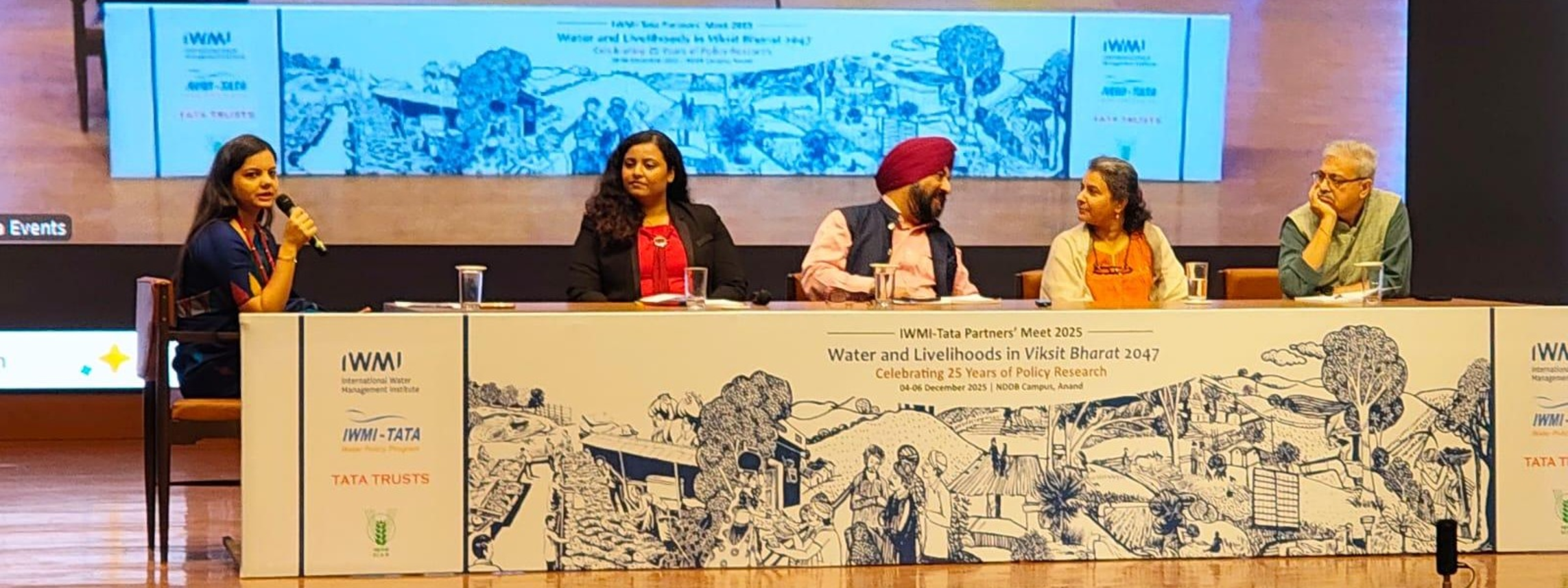
At this year’s IWMI–Tata Partners’ Meet, a diverse group of leaders from philanthropy, CSR, civil society, and research institutions gathered to reflect on the evolving landscape of water security and climate resilience in India. The roundtable, “Flowing Together: Aligning Philanthropy and CSR Priorities for Viksit Bharat 2047,” brought together an expert panel featuring Apoorva Oza, Aga Khan Foundation; Sangeeta Mamgain, Piramal Foundation; Stephanie Miranda, Hinduja Foundation, and Ravinderjit Singh, Tata Trusts.
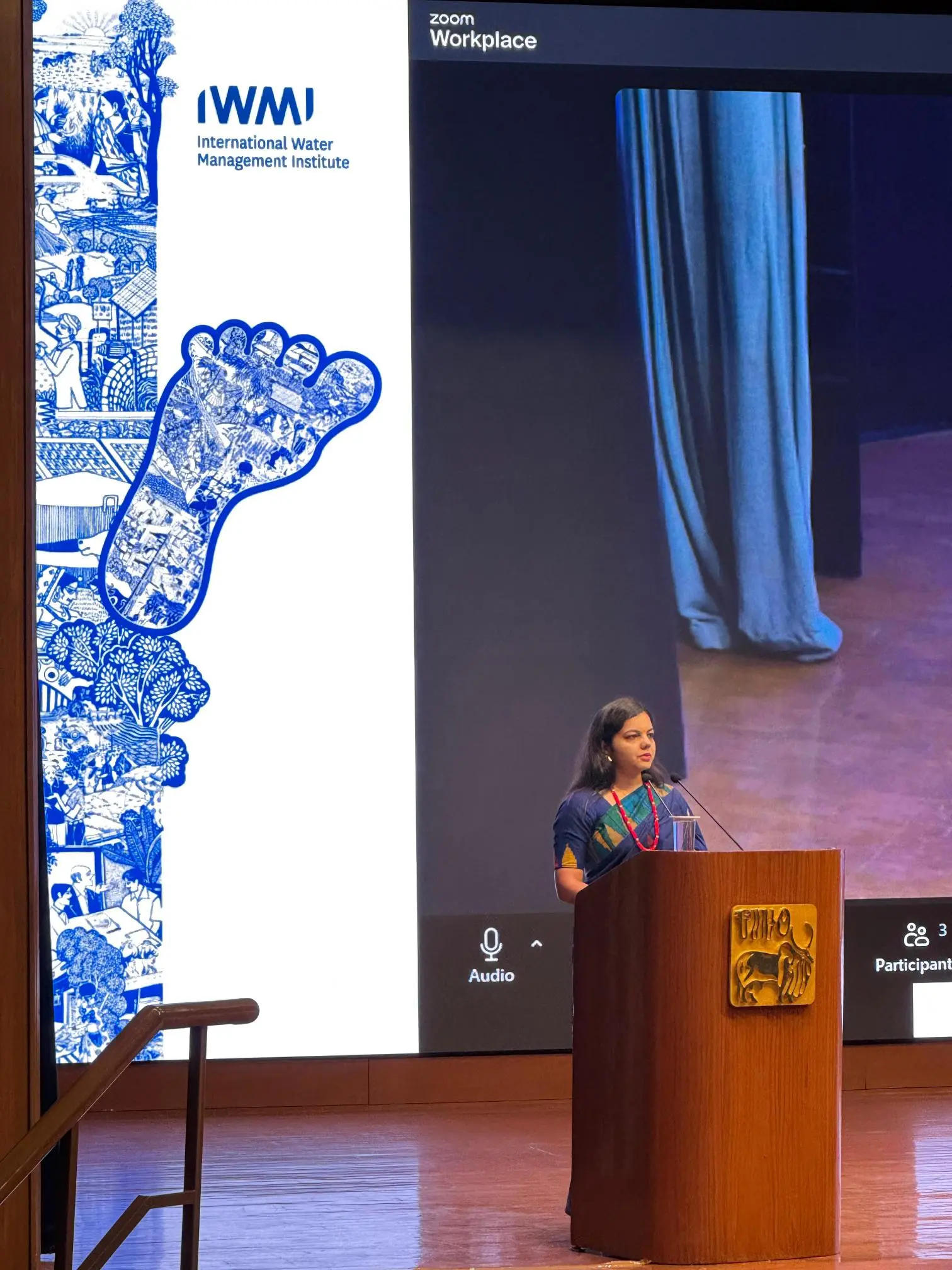
The session was moderated by Manisha Shah, Philanthropy Partner at Synergos, who guided the wide-ranging discussion.
Resetting the Future of Resource Mobilization
Speakers agreed that India’s water sector is at a critical moment. Flexible funding is shrinking, progress is uneven, and grassroots organizations are under pressure. Several emphasized the need to “reset how we mobilize resources for the next decade,” reinforcing the centrality of community-led institutions. CSR funding has grown, but internal alignment within companies remains slow, often requiring leadership exposure to field realities.
“Alignment has to come from the heart, not just compliance,” a speaker noted.
From Coordination Gaps to Real Collaboration
Participants highlighted persistent fragmentation among actors with shared goals. Many stressed the need to treat CSOs as partners rather than vendors and noted how field visits can shift understanding for corporate leaders.
India, they agreed, needs platforms that foster trust, transparency, and shared purpose across philanthropy, CSR, government, and civil society.
CSO–Government Dynamics: A Changing Landscape
The panel discussed how CSO–government relationships have shifted. CSOs once played a strong role in ideation and policy innovation, but that space has narrowed as consultancy firms shape program design. State-level variation is significant: some governments remain open to collaboration, others more restrictive.
Philanthropies and corporates were encouraged to reopen channels for dialogue. “You can push ideas through government in ways that CSOs alone cannot,” one panelist observed.
Systems Change: Leadership, Safe Spaces, and Courage
Speakers agreed that systems change depends on people and incentives, not just program design. Safe spaces for experimentation, tolerance for failure, and aligned teams were seen as essential. Foundations, with their long-term orientation, can create these enabling conditions.
“Systems change doesn’t happen in one-year cycles; it requires bold leadership and patient capital,” a participant noted.
Philanthropy & CSR: The Power of Complementarity
A key insight was the clear complementarity between philanthropic and CSR capital:
Philanthropy can take risks, support innovation, and build capacity. CSR can scale proven solutions.
India has yet to fully leverage this partnership model, participants said, but doing so could accelerate impact across the water sector. Scaling successful pilots and strengthening CSO capacity remain urgent priorities.
Strengthening the Sector for the Future
The discussion broadened to long-term sector needs, including stronger implementation organizations, climate-smart agricultural innovations, social enterprises, and market-led solutions. Trust-building emerged as a recurring theme.
“Water is too large and complex for any single actor. It will take philanthropy, CSR, government, markets, and communities working together,” one speaker summarized.