
Synergos GPC Members Lead Discussions at Business & Philanthropy Forum 2025 in Singapore
At the Business & Philanthropy Forum 2025 in Singapore, senior leaders of Synergos and members of the Synergos Global Philanthropists Circle (GPC) led two compelling discussions that showcased how women and next-generation philanthropists are shaping the future of responsible business and social impact.
Women Redefining Philanthropy
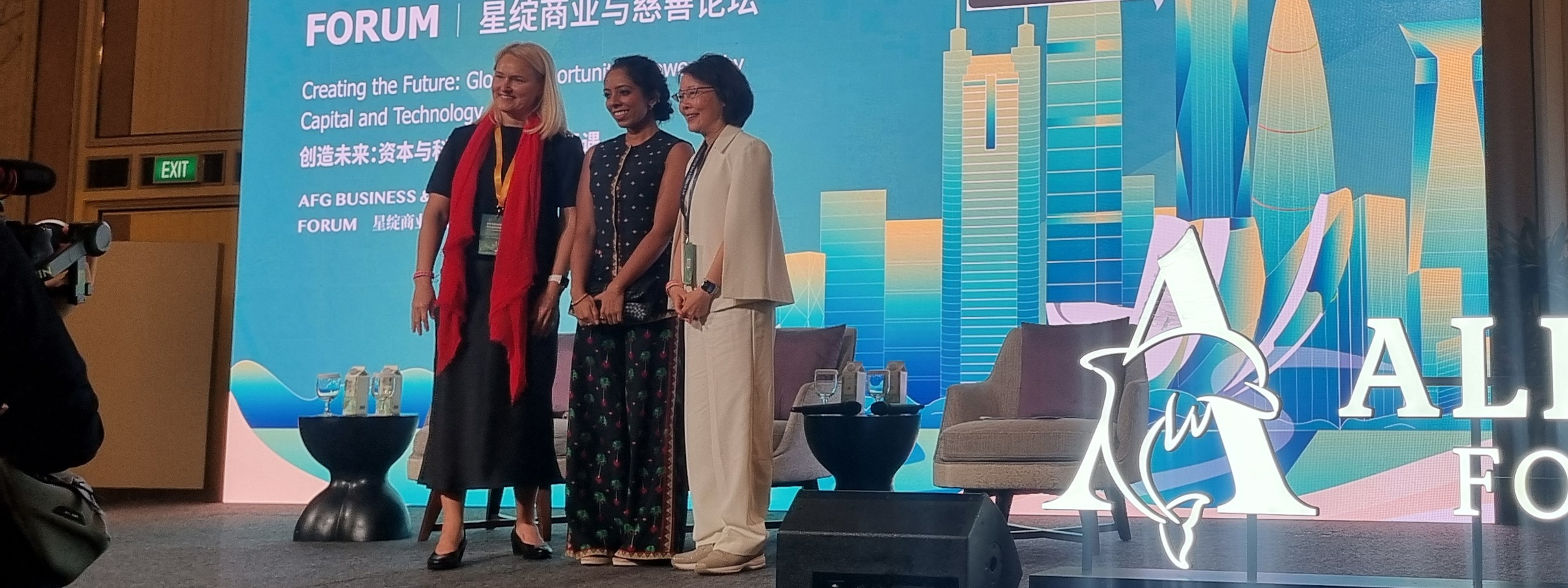
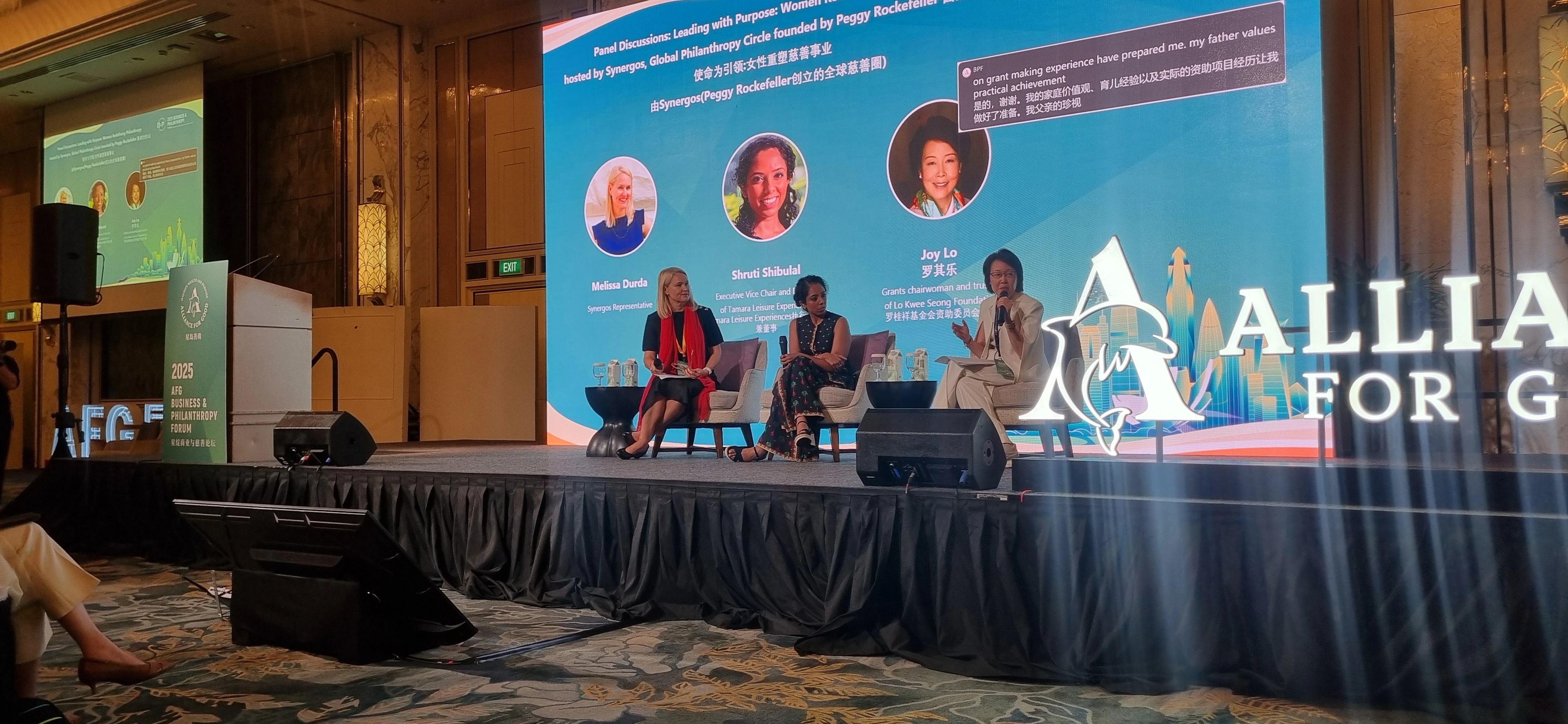
In the first panel, Melissa Durda, Senior Director at Synergos, moderated a conversation with GPC member Shruti Shibulal and philanthropist Joy Lo on the evolving role of women in philanthropy and business.
Melissa opened by highlighting Shruti’s leadership at Tamara Leisure Experiences and her efforts to embed responsible tourism, sustainability, and gender-forward practices into business operations. Shruti reflected on how her parents shaped her philanthropic values, and how she brings a hands-on, impact-focused approach to grant-making. She described Tamara’s detailed sustainability metrics and introduced the SAATHIYA Program, which supports young people entering the hospitality sector through training, mentoring, and five-year engagement to ensure long-term career success.
Joy shared her own values-driven path, underscoring the importance of rigorous, systematic metrics in sustainability. She highlighted the Light B initiative, a transitional housing model supporting families toward upward mobility. Both speakers emphasized the need to balance profit, people, and planet—sharing examples such as energy-efficient design, local hiring, and holistic approaches that strengthen both business performance and social outcomes.
On women’s leadership, Joy and Shruti spoke about empathy as a core strength. Joy highlighted efforts such as the Women’s Empowerment Fund in Hong Kong, while Shruti reflected on growing up in a philanthropic family where responsibility and compassion were central. The panel also explored cross-sector collaboration, with Joy describing scientific work on climate-smart soybeans and Shruti emphasizing the importance of localized partnerships through initiatives like Shikalokam.
Both agreed that Asian women are already playing a transformative role in philanthropy, driven by collaborative mindsets, impact measurement, and strong family-based giving traditions.
Next-Generation Leadership and the Future of Philanthropy
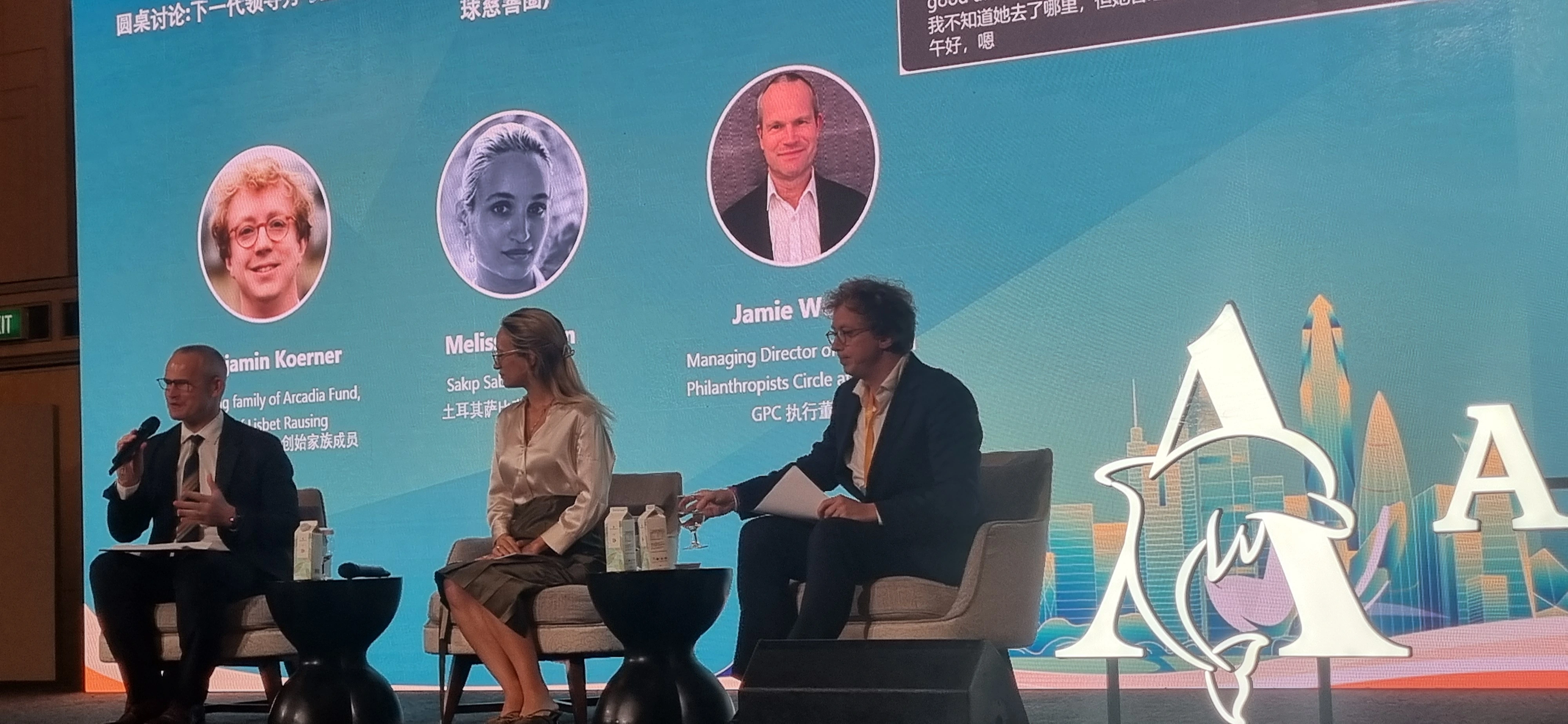
The second panel, led by Jamie Webb, Managing Director at Synergos, focused on how next-generation philanthropists are adapting family legacies to a rapidly changing world. He began by introducing the Global Philanthropists Circle, founded 25 years ago by Peggy Dulany and David Rockefeller to support hundreds of philanthropic families across more than 30 countries.
Jamie then introduced Melisa Sabancı Tapan, a next-generation business and philanthropic leader from Turkey. Melisa described how her grandfather’s values shaped her early understanding of responsibility, and how she has been questioning, evolving, and reimagining those values for the future. Her work ranges from transforming her grandfather’s home into a museum to founding Gate 27, an artist residency that integrates sustainability, creativity, and inclusive economic development. She also discussed digitizing her grandfather’s archives and using AI to engage young people at the intersection of culture, technology, and ethics—underscoring the importance of kindness, empathy, and “remaining human” in a digitizing world.
Jamie next introduced Benjamin Koerner, who represents a new generation of the Rothschild family committed to environmental stewardship and sustainable business. Benjamin reflected on how early interactions with farm workers shaped his awareness of responsibility and the long-term nature of land stewardship. His focus on regenerative agriculture centers on soil health, reduced inputs, and global data-sharing to strengthen sustainable food systems. He spoke about forging his own identity within a historic family and emphasized curiosity as the key to breaking from fast-paced pressures and creating meaningful, long-term impact—illustrated by his rewilding project in Scotland.
Together, Melisa and Benjamin explored how responsible land stewardship and cross-disciplinary collaboration can create systemic change. Melisa described Gate 27’s approach of integrating art, science, and industry, while Benjamin highlighted the constant monitoring, experimentation, and knowledge-building required in regenerative agriculture.
In closing, Jamie invited both speakers to share the ethical principles they hope to pass to future generations. Melisa emphasized empathy, humanity, and staying grounded despite rapid technological change. Benjamin highlighted curiosity as a lifelong practice that drives learning, resilience, and meaningful contribution.
A New Chapter of Global Philanthropic Leadership
Across both panels, Synergos GPC members demonstrated how women leaders and next-generation philanthropists are reimagining the future of philanthropy—integrating sustainability with business, embedding empathy in leadership, and modeling long-term, values-driven approaches to complex global challenges.
From responsible tourism and regenerative agriculture to creative residencies and cross-country scientific collaboration, the discussions reflected a shared commitment to innovative, collaborative, and deeply human-centered philanthropy—offering a hopeful blueprint for the future of social impact in Asia and beyond.