
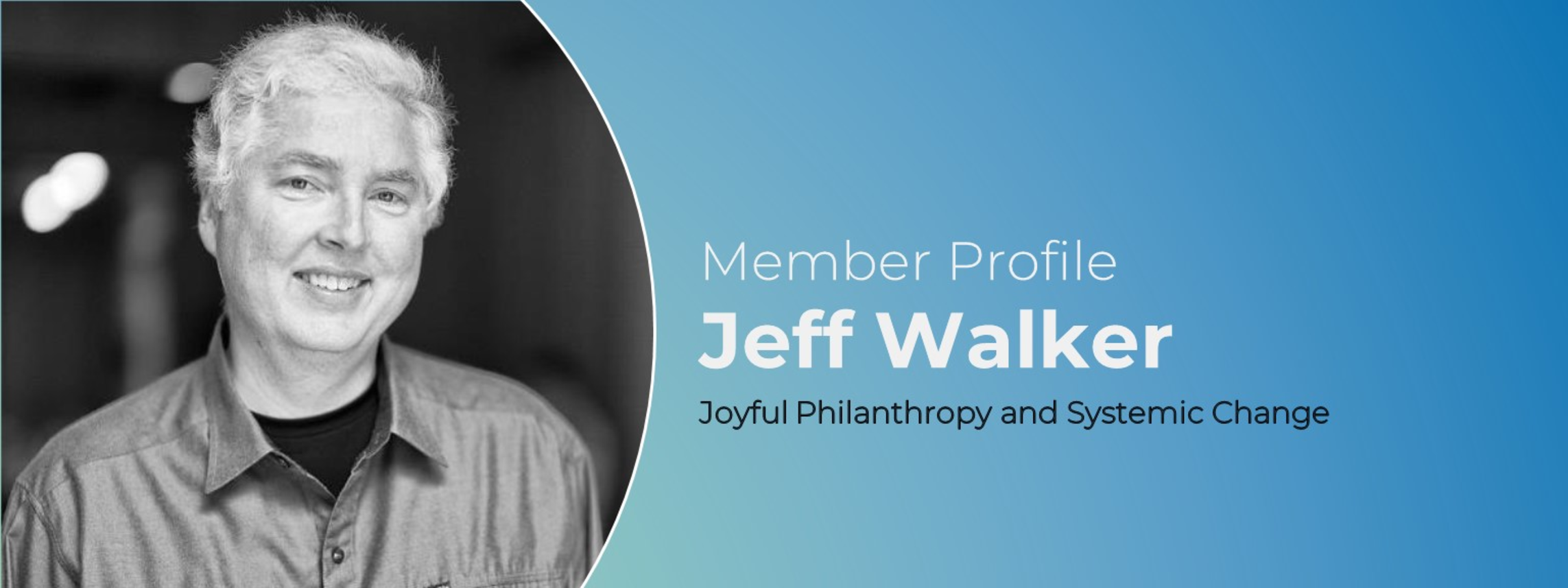
GPC Member Profile: Jeff Walker - Joyful Philanthropy and Systemic Change
GPC Member Profile: Jeff Walker - Joyful Philanthropy and Systemic Change
Philanthropist, author, and jazz aficionado, Jeffrey Walker has been a prominent figure in the world of social change for more than two decades. Serving on the boards of numerous organizations, including New Profit, Berklee College of Music, and the University of Virginia Center for Contemplative Sciences, this year Jeff embarked on an additional role as a podcaster.
System Catalysts, co-hosted by social entrepreneur Tulaine Montgomery and social activist English Sall, shares compelling stories that show how people around the world are promoting positive transformation on their communities from the bottom up, through collaboration and meaningful partnerships. They advocate for systematic change, that is, addressing the root causes of social problems rather than the symptoms. This requires a shift in traditional power dynamics and mindsets.
 It goes without saying that this is no easy feat. However, when collective power is strengthened towards a common goal, it reaches a point where the joint effort gains a dimension that is bigger than the individuals themselves – it becomes a movement. And it’s a movement if it moves without you.With an impressive array of guests, the podcast’s episodes address topics that range from access to food and health services, racial injustice, mental health and much more, inspiring the listener to use a catalytic approach to tackle tough issues.But what makes a system catalyst? According to Jeff, who has worked with – and interviewed – many of them, what sets them apart from other people in the field is that they don’t have single solutions to problems. They are good listeners and work collaboratively. They are adaptable and open to change.
And so is Jeff himself. During our conversation, he states that his views on philanthropy are always evolving. He is enthusiastic about learning from his peers and sharing the joy of creating profound impact. Moreover, it is evident that self-inquiry and personal growth play a pivotal role in his life and work. A long-term practitioner of meditation, he believes that understanding oneself helps develop compassion, which is key for action to flourish.
Jeff is committed to making philanthropy a joyful endeavor: “If it’s not fun, let’s not do it.” The key to this resides in working together. He draws comparisons with music, highlighting the fulfillment of playing different instruments as a group and producing sounds a single musician would not be able to make on their own.Jeff’s passion and commitment to fostering system change shine through in this interview as he talks about the making of System Catalysts, insights shared by guests of the podcast, and lessons learned. We invite you to take inspiration from his unique approach to philanthropy and his joy in igniting positive social transformation.
* * *
How does having a podcast about social change compare to your other efforts in the philanthropic arena? What has been unique about this journey?
The podcast is very complimentary to my other endeavors in philanthropy and social change. Whether it’s writing, teaching, or researching, the podcast helps me go deeper into understanding what it takes to do complete system change, and how to identify system catalysts, who are key components in coordinating this change.
I’ve worked with a number of system catalysts over the years, and they are amazing. They’re different from a lot of other people because they don’t have single solutions to problems. What the podcast does is help me understand how they promote change and what tools they use. It allows me to learn not only about the nuances of specific issues that we talk about in each episode, like homelessness or slavery, but also about systems and leadership as a whole.
For instance, in the episode about GirlTrek I learned that peer-to-peer learning is a tool that can potentially be used by many others in the social change space by taking individuals and building community with them locally, so that they can then empower the change that we want to see. But it’s not a top-down effort – it’s very locally engaged. So that’s a learning point that I can take, and many others can take, hopefully, to apply to other issues.
The podcast’s impressive guest lineup showcases a broad network of diverse changemakers. With this abundance of opportunities, could you explain how you and your co-hosts select guests and topics for the show?
 The selection process for our guests involves collaboration with our partners, including Synergos. We seek recommendations from them and consult with friends who may have valuable insights as well. Diversity, in terms of views and areas of focus, plays a significant role in our decision-making – this way we have something that fits multiple people’s interests. Moreover, we consider the diversity of our guests, including factors such as age, ethnicity, and backgrounds, and aim for a balance between global and US-European perspectives. This approach ensures a broad and inclusive representation on the podcast.
As one of the three hosts, alongside Tulaine Montgomery and English Sall, how do your individual strengths and perspectives complement each other within the podcast?
I won’t be involved in anything if I don’t have partners. Having people around me is what gives me energy and makes things fun. It’s like making music – playing in a group is much more interesting, because you can produce songs you can’t make by yourself.
Working with Tulaine and English enriches the podcast. Our diverse backgrounds and expertise create a dynamic and fruitful collaboration. Tulaine is a very strong voice in the social change world, with deep knowledge of education, workforce, and health strategies. English brings a younger, tech-savvy perspective and plays a crucial role in connecting with donor networks. Together, we balance and exchange knowledge to offer a comprehensive view of social change and philanthropy.
The joy you find in philanthropy and catalyzing change is evident. Can you elaborate on your concept of joy within philanthropy and how it drives your work? My philosophy is: “If it’s not fun, let’s not do it.” For me, philanthropy should be both joyful and challenging. It works like a puzzle in which we all work on together and learn from each other. Drawing another analogy with music, when a partnership works, it turns into a bit of a flow state, where you almost start forgetting who is doing what because it’s a collective effort. I believe that we should try to make the most out of everything that we’re involved in. There is always more to learn, more to give. It’s easier to donate some money to a smaller organization that’s trying to grow, but helping them get to the point where their ideas can then be embedded in the larger system change model is wonderful and much more meaningful.
That’s precisely why we created this podcast – to bring that opportunity for joy to others, to stimulate collaboration and partnerships. And to share real stories and examples of system change in action. Without concrete examples, it’s harder to understand what this is about. The knowledge is within the systems, and there are often local solutions and perspectives we can learn from. Many of our guests are already using these principles to drive change effectively.
Have there been any unexpected or surprising moments or insights shared by your guests that significantly impacted your own philanthropic activity?
One surprising lesson is that there are more system catalysts out there than we may realize. Many individuals are already naturally drawn to these models because they’re tired of the top-down approach. Collaborative, network-supported, locally empowered models are more effective. These catalysts are using them, and it’s essential to highlight these examples. Proximity and equity are recurring themes in our conversations, emphasizing the need to listen to and include those who are directly affected by the issues. The proximity of solutions and local empowerment is where true change begins.
GirlTrek is a great example – it’s an initiative to encourage African American women, especially in inner-city areas, to walk together and support each other in their health journeys. The concept is simple: as these women walk, they talk. And when they talk, they organize. So they are not only enhancing their own health, but also actively working towards helping other women. GirlTrek’s approach is grounded in peer-to-peer support, making it a cost-effective way to foster this community.
Additionally, they have launched a popular podcast which participants can listen to while they walk or discuss during their walks. This reinforces the sense of community and empowers women to bring positive changes to their own communities based on their interests and priorities.
Could you share how your perspective on philanthropy has evolved over your journey, particularly the development of your “bottom-up” approach to social problems? My view on philanthropy continues to change. It’s always evolving and there’s no ultimate answer. It’s crucial not to seek one-size-fits-all solutions. I’m not a fan of rigid formulas. Instead, I believe in partnerships.
When I transitioned from the business world to the nonprofit sector, I realized you can’t just apply a business model to social change.
We must collaborate with governments, foundations, and multilaterals. True system change demands diverse approaches.
Business skills like technology and marketing are useful, but not enough. It’s also about fostering humility, effective communication, and collaboration. You want people who have good listening skills and do inner work.
System Catalysts had a strong start. It reached #3 on Apple Podcasts’ ranking in the Nonprofit category, and consistently maintained a position in the Top 100 Nonprofit shows. Were you surprised by this rapid success, and what do you think played a role in achieving it?
We are grateful for this success, but there’s always room for improvement. We started the podcast with high ratings and, according to our statistics, of all people who listen to Systems Catalysts, 95% complete listening to each podcast. I believe that the key to our podcast’s popularity is the quality of the individuals we host – their stories resonate with our audience. Also, we put effort into producing really well-edited discussions. Moving forward, we’re focusing on audience development. The podcast landscape is constantly evolving, with increasing options for listeners. To stand out, you need quality content and regularity. Our podcast leans towards global issues, but diversity is essential, and we aim to cater to a broad audience. In our second season, we’re exploring discussions with donors, collaborators, and corporations. The goal is to highlight various perspectives and provide a well-rounded podcast.
Can you elaborate on how inner work and self-awareness connect with effective philanthropy and fostering change?
Personal growth and self-awareness are integral to effective philanthropy. Understanding yourself through self-inquiry helps you to be compassionate. Compassion, in turn, drives you to action. This journey is about transcending individual ego, understanding that we’re all interconnected, and creating a positive feedback loop. How other people tell you you’re acting is good input for how you need to change yourself in a positive way.
You improve yourself while aiding others, and this is where joy and flourishing come from.
Systems Catalyts: A Playlist
Episode 01: It’s a Movement if it Moves Without You with Giving Tuesday
Asha Curran – Giving Tuesday CEO, Henry Timms – Lincoln Center President and CEO
Episode 07: What Community Level Systems Change Is with KZN Network
Cookie Edwards – Executive Director of the KZN Network, Jessica Chiliza – Associate Program Director at Charlize Theron Africa
Episode 10: Partnering with Donors and Doers with The END Fund
Ellen Agler – The END Fund CEO, Tsitsi Masiyiwa – Co-Founder & Chair of Higherlife Foundation & Delta Philanthropies
Episode 11: GirlTrek: When Black Women Walk Together, Things Change
T. Morgan Dixon – GirlTrek Co-Founder and CEO, Dr. Gary Bennett – Professor and Dean of the Trinity College of Arts and Sciences at Duke University
Rapid Fire Questions with Jeff Walker
Share a mantra that inspires you.
I love the medicine Buddha mantra which brings loving kindness and compassion to ourselves, our community, and the world. I recite it every day.
What advice would you give your younger self?
The work we do in the world isn’t for you or even just someone else. It is for the “we.” We are all the same spirit, just in different forms. We are helping ourselves by helping others.
What is your most prominent characteristic that shapes your work?
Collaboration is key to everything I work on. In fact, I will not support any effort unless I am partnering with at least two other people or organizations.
How do you approach your practice differently from most people?
I tend to focus more on identifying the problem that needs to be addressed and the many potential tools to address it rather than identifying one solution to support. I support the various solutions that help solve a problem.
What never ceases to surprise you?
I love the creativity and passion that I experience when working on a project or problem with others. It is like I am playing an instrument in a great jazz band.