AI for Humanity: Keeping Human Purpose at the Centre of Technological Progress
Shared by Manisha Shah, Asia Philanthropy Partner
As artificial intelligence reshapes how we work, learn, create and make decisions, a fundamental question remains: how can we ensure that AI serves humanity? And what responsibility do those with the greatest resources and influence have in shaping its future?

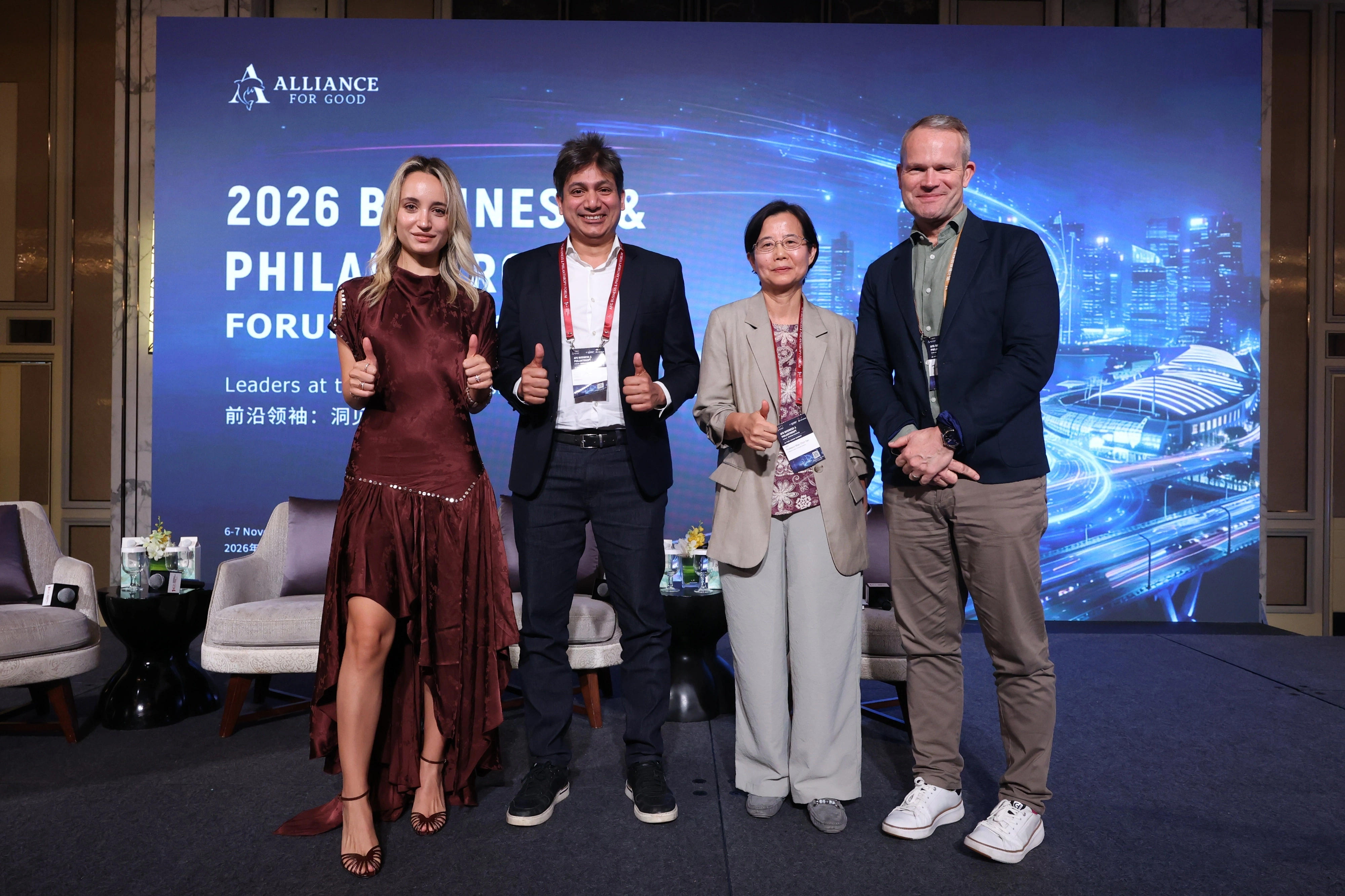
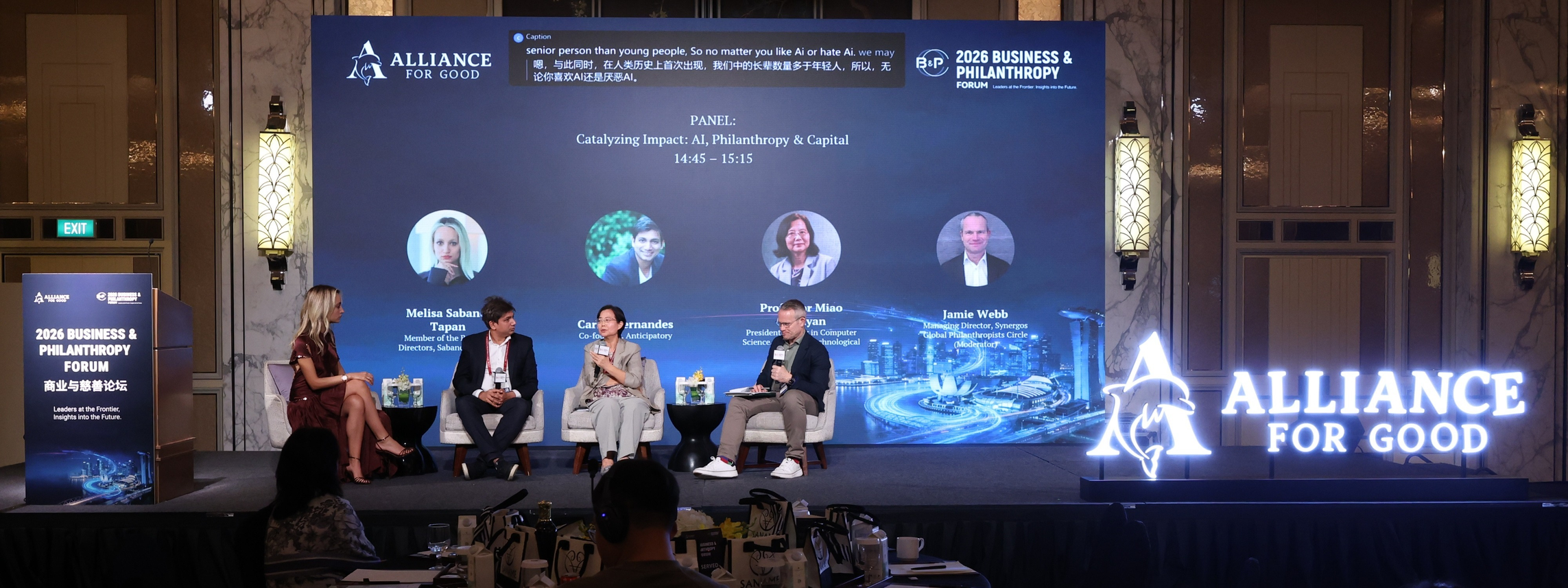
At the 2026 Business and Philanthropy Forum in Singapore, a panel titled *AI for Humanity: Harnessing Technology, Philanthropy and Capital for Good* brought together perspectives from business and social impact leader Melissa Sabanci-Tapan, technology strategist and entrepreneur Carlos Fernandez, and Professor Chun-Yan Mao of Nanyang Technological University. Moderated by Jamie Webb of Synergos, the conversation explored how technological progress can be guided by human values, purpose and responsibility.
For Sabanci-Tapan, the question of what it means to remain human in a digitised world has evolved into a deeper inquiry: what does it mean to remain *humane*? Reflecting on her work bringing together technology, academia, arts and social impact, she emphasised the importance of pausing to understand our values, resources and unique contribution before deciding how to act. Without this alignment, even well-intentioned initiatives risk becoming superficial.
Fernandez offered a practical framework for thinking about where AI belongs in our lives. He distinguished between the *what* and the *why* of human activity: AI can help us complete tasks, but should not take away the purpose, learning and judgement behind them. He cautioned against delegating formative tasks that help people develop skills, or decisions that require human responsibility. For philanthropy, he argued, the opportunity is not to outspend the technology industry, but to invest where commercial incentives may fall short — including supporting people as they learn and strengthening accountability when AI makes mistakes.
Professor Mao highlighted the potential of human-centred AI to address some of society's pressing challenges, particularly healthy ageing. Her work explores how AI can support brain and physical function, social connection and early identification of dementia. One example demonstrated how a simple AI-enabled musical staircase encouraged older people to be more physically active, illustrating how accessible technologies can make a meaningful difference in everyday life.
The discussion returned to a shared imperative: technological advancement must not come at the expense of human agency, connection and discernment. As AI becomes more capable, the responsibility to remain thoughtful, accountable and humane becomes even greater.
For philanthropists and business leaders, the opportunity is to help shape not only what AI can do, but what it should do — and whose lives it ultimately serves.