
From Catalytic Capital to Human Values: Reflections from the India Philanthropy Forum
Written by Jamie Webb, Managing Director of the GPC
One of the most striking aspects of this year's India Philanthropy Forum was the consistency of the conversations. Although speakers came from different sectors, generations and disciplines, many returned to the same fundamental question: what role should philanthropy play in an increasingly complex world?
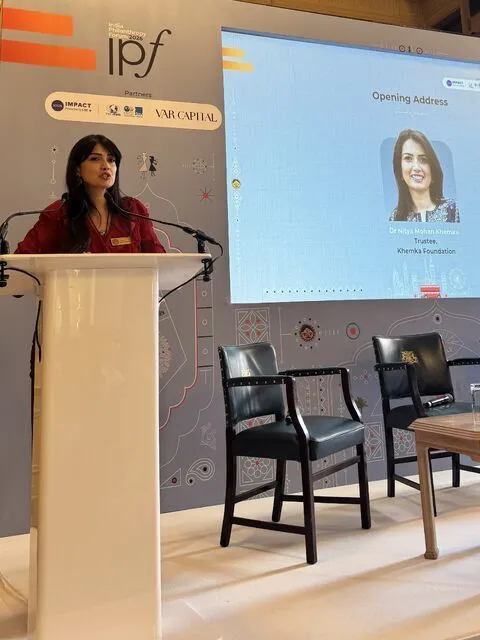
The Forum opened with thoughtful reflections from Dr Nitya Khemka, Trustee of the Khemka Foundation, who set the tone for the day by describing philanthropy not simply as a source of funding, but as a catalyst for systems change. Against a backdrop of declining trust in institutions, geopolitical uncertainty and significant reductions in international development funding, she argued that philanthropy has a unique opportunity to provide the flexible, patient and risk-tolerant capital that enables innovation and long-term progress.
Rather than attempting to replace governments or markets, she suggested that philanthropy is at its strongest when it invests in the conditions that allow change to happen. This means supporting partnerships, strengthening organisations, building networks and creating the trust that enables collaboration across sectors. Her description of philanthropy as the "connective tissue" within society was a powerful reminder that lasting change depends as much on relationships and infrastructure as it does on individual programmes.
One observation particularly stayed with me. Dr Khemka reflected that the familiar phrase, "Teach a man to fish", no longer captures the complexity of today's challenges. It is no longer enough simply to equip individuals with better tools. We also need to create the conditions in which people, communities and ecosystems can genuinely thrive. That shift from individual interventions towards systems thinking became a recurring theme throughout the Forum.
Several sessions reinforced this perspective. Discussions around climate, food systems and research all highlighted the importance of collaboration, trust-based philanthropy and investing in the wider ecosystem rather than focusing solely on individual projects. There was also increasing recognition that philanthropy's greatest strength lies in its ability to convene people, test new ideas and support approaches that others may be unwilling or unable to fund.
One panel that particularly resonated explored the growing role of family philanthropy in India. As wealth continues to increase, advisers are increasingly helping families move beyond deciding what to fund and instead explore why they are giving in the first place. Conversations about values, purpose, legacy and the aspirations families hold for future generations are becoming just as important as discussions about strategy or governance.
The session that stayed with me most, however, was The Hidden Value: Philanthropy as a Value-Oriented Practice.
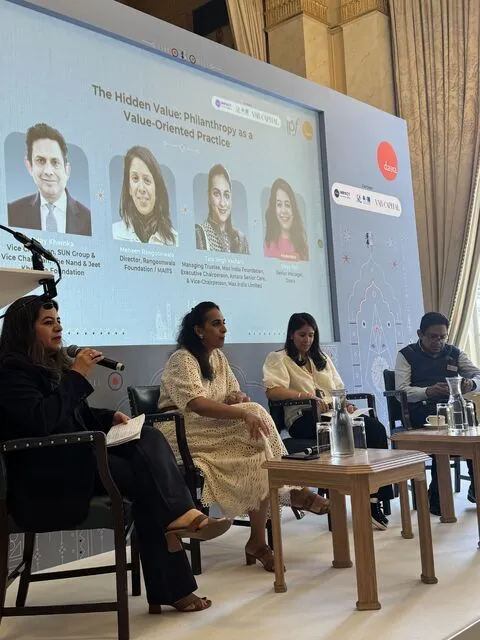 While many conferences focus on frameworks, measurement and implementation, this discussion stepped back to consider the personal values that shape philanthropic leadership. It explored questions that are often less visible, but ultimately determine how families choose to use their wealth and influence.
Uday Khemka, Vice Chairman of Sungroup Global and Synergos Board Member, offered one of the most thoughtful contributions of the day. Speaking about legacy, he questioned whether philanthropy should be driven by the desire to leave one's name behind for future generations. Instead, he suggested that meaningful philanthropy emerges from something much simpler and much deeper: our shared humanity.
His reflections on values were particularly compelling. Rather than treating values as complex frameworks to be defined and analysed, he described them as expressions of love, compassion and authenticity. They are reflected not in what we say, but in how we choose to spend our time, our energy and our attention. It was a refreshingly human perspective that shifted the conversation away from technical approaches to philanthropy and back towards the motivations that inspire people to give in the first place.
Other panellists built on this theme. Meheen Rangoonwala, Director at the Rangoonwala Foundation, reflected on the responsibility of stewarding family philanthropy across generations, balancing respect for donor intent with the need to remain relevant to an evolving world. Tara Singh Vachani, Vice-Chairperson of Max India Limited, shared how her family's philanthropy has become increasingly strategic over time, applying the same discipline and long-term thinking to creating social impact that they would bring to building a successful business. Together, their perspectives demonstrated that philanthropy is continually evolving, while remaining grounded in enduring values of compassion, responsibility and service.
What I found particularly encouraging was how closely these conversations aligned with many of the themes we explore within the Global Philanthropists Circle. Whether discussing systems change, trust-based philanthropy, intergenerational leadership or collaboration, the emphasis consistently returned to relationships, purpose and the importance of creating the conditions for others to succeed.
Perhaps that is the greatest value philanthropy can offer today. Not simply funding solutions, but connecting people, building trust and creating the space for long-term change to emerge.
If there was one message I took away from the Forum, it is that effective philanthropy begins long before funding decisions are made. It begins with understanding our values, recognising our shared humanity and asking not only what change we want to create, but how we choose to show up in helping to create it.