
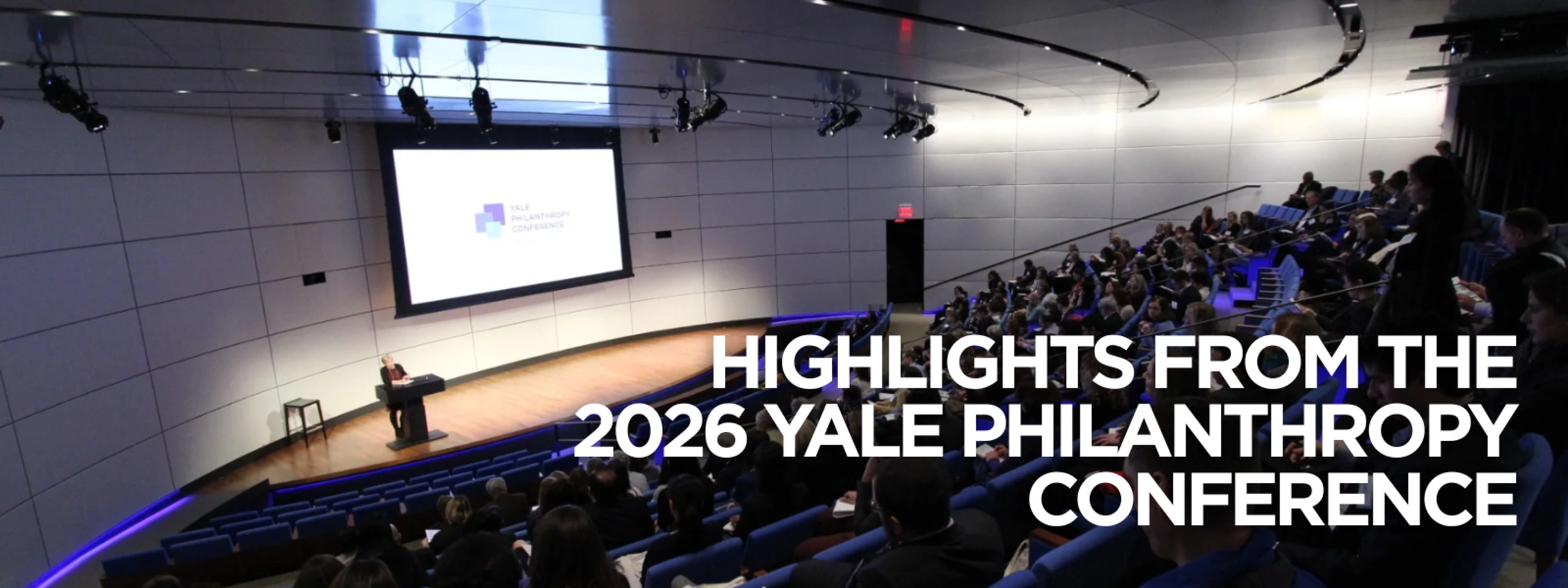
Highlights from the 2026 Yale Philanthropy Conference
Last month, Synergos' Senior Associate Aloukik Rana attended the Yale Philanthropy Conference (YPC), centered around the theme of Adaptation and Opportunity.
After participating in sessions about topics that Synergos is deeply engaged with, Aloukik shared highlights from the Conference. Keep reading to get insights on AI, next-generation philanthropy, and how the nonprofit has been responding to current funding gaps in the sector.
Keynote from Alexander Diaz, Head of AI at Google.org
Alexander Diaz emphasized that AI is moving from theoretical to practical application, particularly in global development and nonprofit work.
AI is proving most useful in three areas:
- Insights (analyzing fragmented data faster and more affordably)
- Action (early-warning systems in climate, agriculture, health, and education)
- Scientific discovery (e.g., breakthroughs like AlphaFold)
The key message was that access to data alone isn’t enough. AI can reduce analysis time and cost dramatically, enabling better, faster decision-making. Philanthropy should treat tech as a core program investment, fund collaboratively, and support long-term innovation.
Innovation in the funding gap: adaptation in times of change
There was heavy emphasis on the significant strain facing the nonprofit sector due to federal funding cuts and structural funding gaps. Foundations have stepped up with increased operating support (e.g., Ford Foundation), but philanthropy cannot fully replace government funding.
Organizations are adapting through:
- Increased collaboration and partnerships
- Mergers and shared infrastructure models – e.g., shared back office and software licenses
- Rethinking fee-for-service models
- Lobbying - advocacy and policy change
The panelists noted a key shift, where non-profits are moving from asking “How do we grow our mission?” to “How do we reduce harm to our mission?”
Emerging Philanthropists: the next generation of giving
This session focused on collective action, donor responsibility, and power dynamics in philanthropy, particularly among next-gen donors. The panel featured speakers from SRT Advising, 21/64, Resource Generation, and the Regeneration Pledge.
There was strong emphasis on:
- Philanthropy as a tool that carries both power and responsibility
- Supporting regenerative, long-term approaches rather than short-term fixes
- Examining what shapes the impulse to give and cultivating a deeper sense of responsibility, not just stewardship