
Reflections from ‘Innovate for Impact’ – Synergos Global Network Gathering in Saudi Arabia
Reflections from ‘Innovate for Impact’ – Synergos Global Network Gathering in Saudi Arabia
From Jamie Webb, Managing Director of the Global Philanthropists Circle
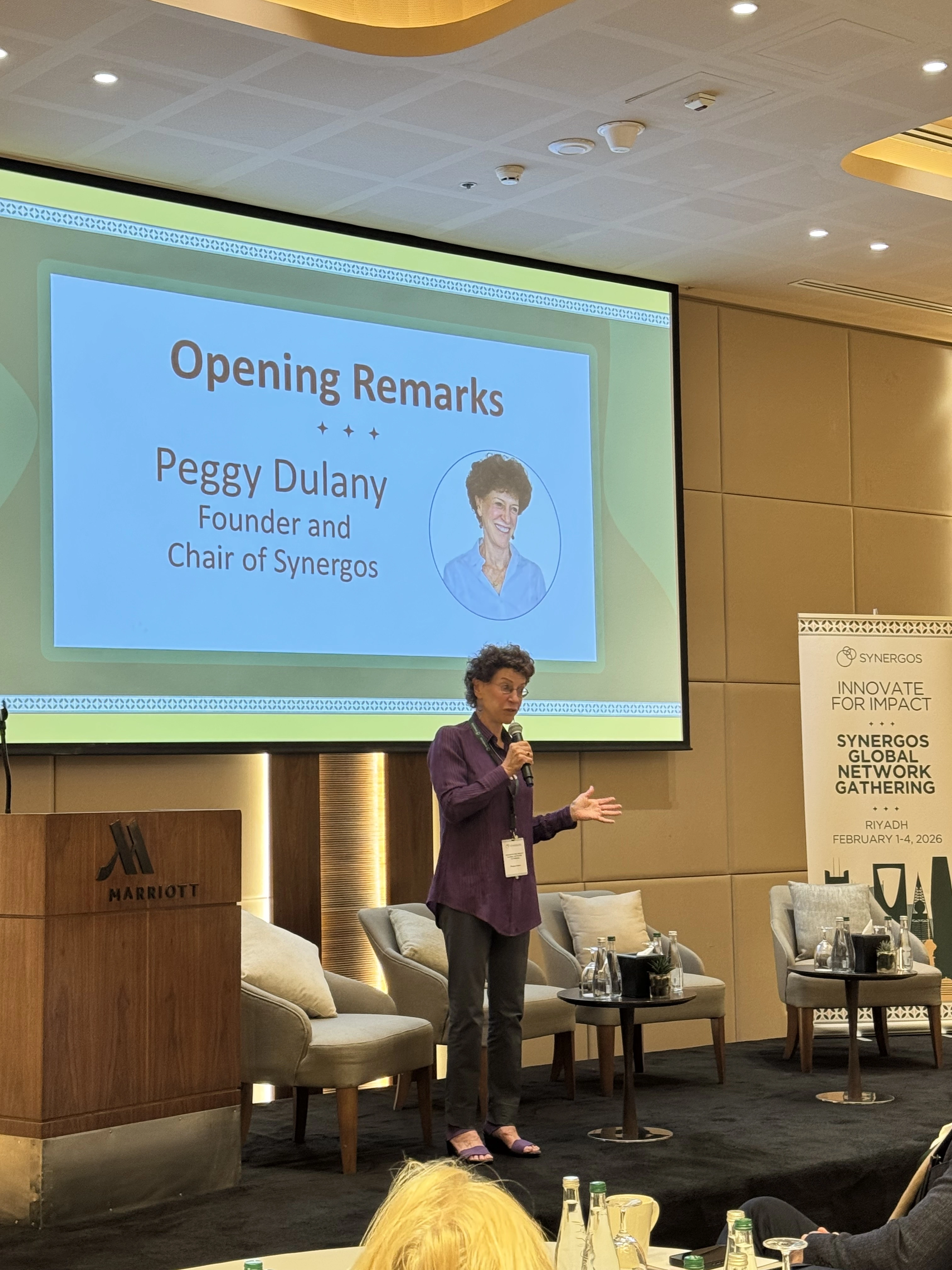
In early February, Synergos convened its Global Network Gathering in Riyadh, Saudi Arabia, bringing together members of the Global Philanthropists Circle, social entrepreneurs from across the Middle East and North Africa, and leading Saudi philanthropic and institutional partners. Over three days, participants explored the rapidly evolving philanthropic landscape in the Kingdom, shared approaches to social innovation, and built new relationships across cultures and sectors. The gathering aimed to strengthen collaboration between Saudi and global leaders working to address complex local and global social challenges.
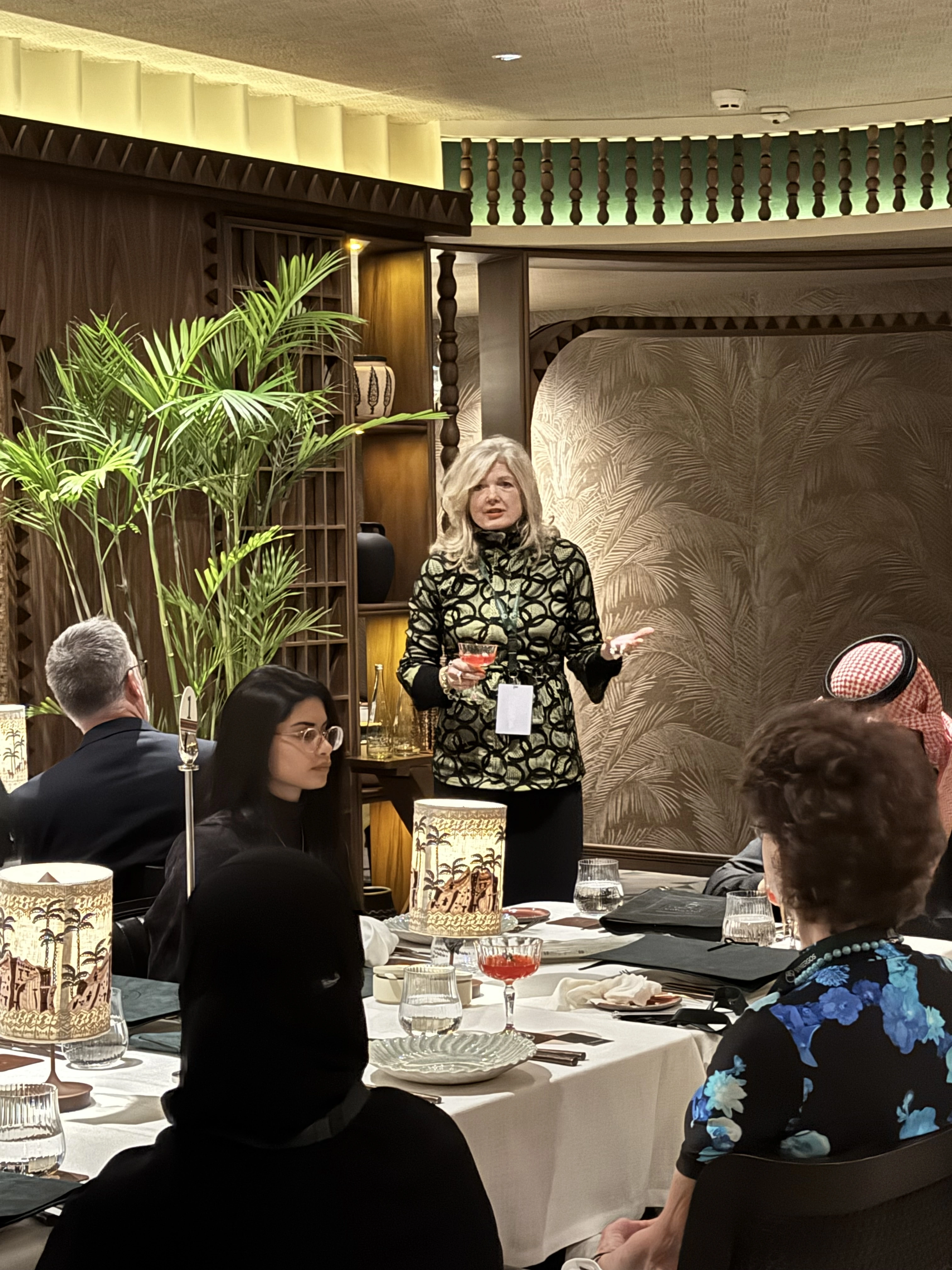
The gathering started with an opening night dinner where philanthropists and social entrepreneurs from across the world gathered over dinner with their Saudi counterparts, many meeting for the first time. Welcome by Synergos President and CEO Camille Massey, the intention was simple but ambitious: to create a space for learning, connection and exchange — and to see what might emerge when people working on complex social challenges, from different cultures and contexts, sat down together.
“magic happens when smart people come together”
 Over the days that followed, one message became clear: Saudi Arabia’s philanthropic ecosystem is evolving rapidly. What stood out most was not only the pace of growth, but the strong appetite for collaboration, learning and global connection.
A country — and a sector — in motion
Saudi Arabia is undergoing profound social and economic transformation under Vision 2030. That shift is visible not only in infrastructure and industry which we witnessed on our cultural trips in Riyadh, but also in the country’s social sector. Participants shared how, just over a decade ago, there were no “backbone” organisations supporting the development of civil society and few philanthropic foundations. Today, the number of non-profits has grown from around 700 to more than 6,000, alongside the emergence of nearly 1,000 foundations.
This growth signals more than expansion; it reflects a maturing ecosystem increasingly focused on partnership, professionalisation and long-term social impact. Representatives from leading Saudi foundations and institutions described a landscape that is becoming more structured and strategic, while still deeply rooted in cultural values around generosity and responsibility.
At the same time, there was recognition that the scale and complexity of today’s challenges — from youth employment to social inclusion and community wellbeing — require collaboration across sectors. Government continues to play a significant social role, but there is growing space for private philanthropy, civil society and social entrepreneurs to contribute in new and complementary ways.
Philanthropy as culture, not just capital
One of the most striking threads throughout the discussions was the way Saudi participants described philanthropy not primarily as a financial activity, but as a cultural one. Giving back, several noted, is “in the DNA” of many families, shaped by religious, social and familial traditions.
“philanthropy is a mindset, part of our DNA, shaped by parents, family”
This cultural grounding brings both strengths and tensions. On the one hand, it fosters a deep sense of responsibility and continuity across generations. On the other, it can sit uneasily alongside global expectations around visibility, branding and transparency. Several participants spoke about a preference for understated giving — doing good quietly rather than publicly — and the challenge of balancing this with the demands of modern accountability and measuring impact.
These conversations highlighted that philanthropy does not look the same everywhere, and that effective cross-border collaboration requires sensitivity to different histories, norms and motivations.
Collaboration as a growing norm
If there was one theme that cut across almost every session, it was collaboration. Saudi leaders described a system where government entities, foundations, non-profits and the private sector are increasingly working together. Leading foundations including the MISK Foundation, Abdul Latif Jameel Foundation and King Khalid Foundation contributed to a rich discussion.
There was clear recognition that no single actor can address complex social issues alone. This was particularly evident in discussions about scaling effective interventions. Participants spoke about the need to move beyond isolated pilot projects towards models that can be replicated and adapted across regions. Social entrepreneurs were seen as critical to this process, bringing innovation, local knowledge and agility — but often needing stronger networks, mentoring and patient support to grow sustainably.
“Amazing local talent of social entrepreneurs but pipeline is a problem"
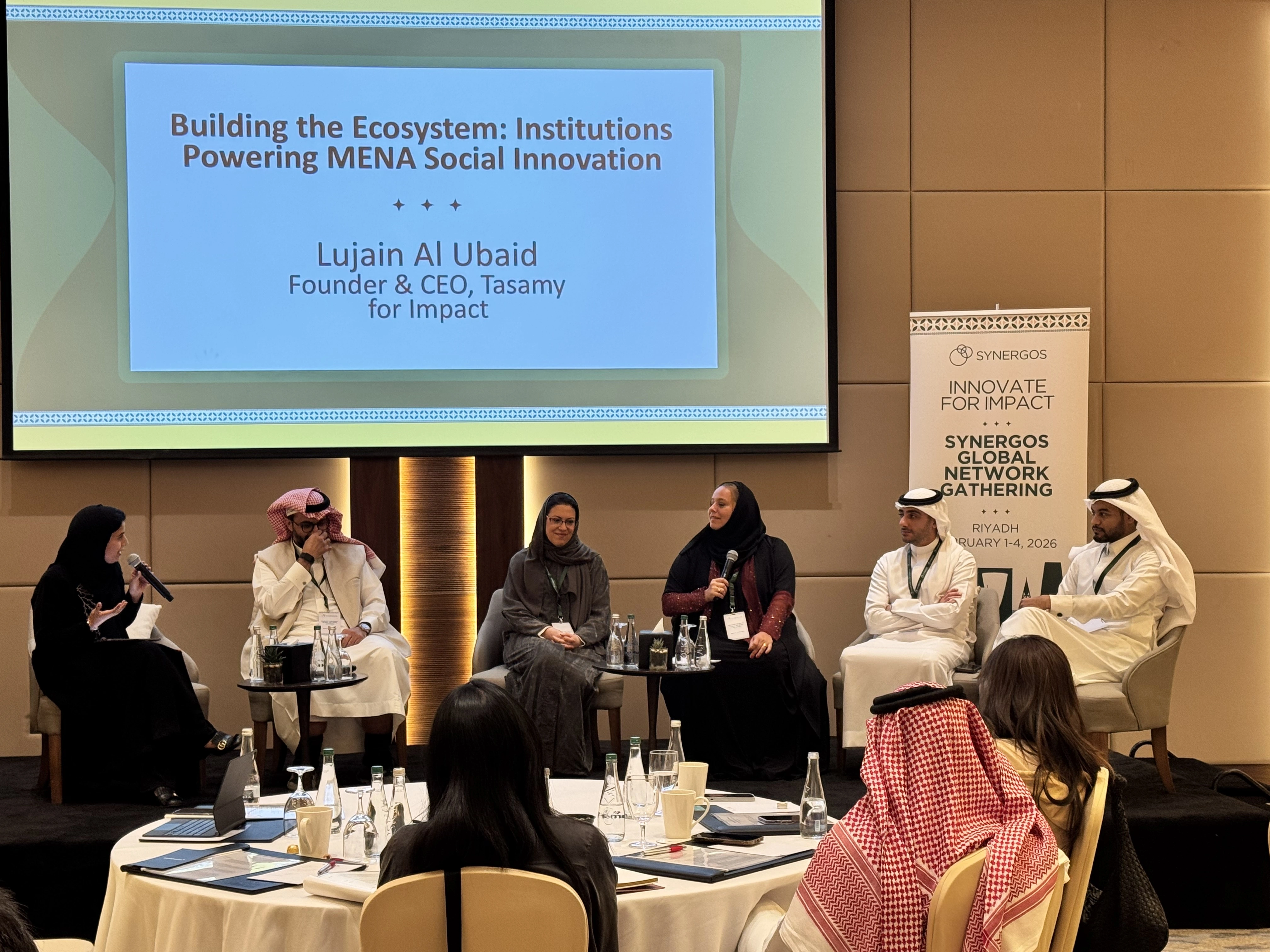 For international participants, these conversations brought to life the social innovation happening in the wider region and the partnership between all actors and sectors in society.
Innovators bringing change to life
The presentations from social entrepreneurs across the Middle East brought these themes into sharp focus. Helped to develop and grow by Synergos, their ventures ranged from improving early cancer diagnosis to supporting artists and cultural creators, and from strengthening local food systems to expanding access to education and opportunity.
What stood out was not only the diversity of issues being addressed, but the combination of ambition and realism. Many founders spoke candidly about the challenges of sustainability, investment and scaling, as well as the importance of mentorship and long-term partnerships [you can find out more about the social entrepreneurs and their ventures here.
Global Philanthropists Circle members engaged with these ventures with both enthusiasm and thoughtful scrutiny. Questions centred on how best to support organisations beyond short-term funding — through governance support, connections, and strategic advice. The exchange felt less like a pitch process and more like the beginning of ongoing relationships.
Identity, generation and the human side of giving
Alongside discussions of systems and strategy, there was a strong focus on the human dimensions of philanthropy. Conversations explored how values are shaped, passed on and reinterpreted within families and communities. Global Philanthropists Circle members contributed to this conversation, which brought in wider perspectives but echoed the importance of values and families in shaping philanthropy like their Saudi counterparts.
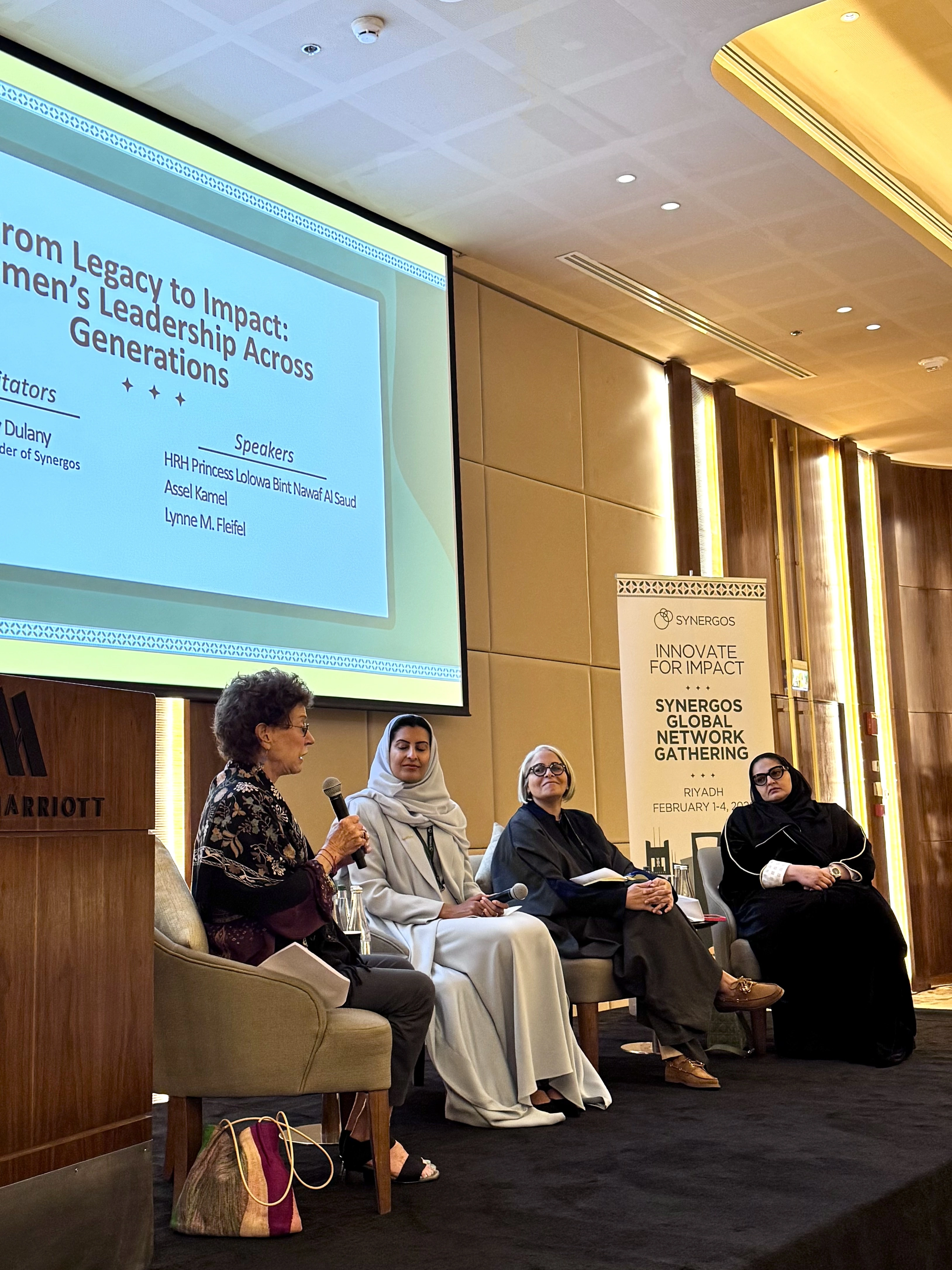 Women leaders spoke powerfully about their growing role in shaping philanthropic priorities, often acting as bridges between tradition and innovation. Intergenerational dialogue was another recurring theme, with participants reflecting on how younger family members are bringing new perspectives on impact, technology and global interconnectedness.
Importantly, the emphasis was not on replacing one generation or gender with another, but on blending perspectives. Several participants noted that effective philanthropy depends on integrating different life experiences, cultural lenses and forms of knowledge — an approach that resonates strongly with the idea of bridging divides rather than deepening them.
Why gatherings like this matter
What made the gathering particularly powerful was not just the exchange of ideas, but the building of relationships. Trust does not form instantly, especially across cultures and contexts. But bringing together Saudi leaders, regional social entrepreneurs and international philanthropists created a rare space for honest dialogue and mutual curiosity. There was a strong sense of gratitude from Saudi leaders that Synergos had made the effort to initiate this gathering, signalling respect, openness and a commitment to long-term partnership.
Participants visited cultural and historic sites alongside formal sessions, sharing meals and informal conversations that deepened understanding beyond the meeting room. These moments helped ground discussions of impact and strategy in a richer appreciation of place, history and identity.
As philanthropy becomes increasingly global, gatherings like this play a quiet but vital role. They help people move beyond assumptions, understand local realities, and explore how global experience and local leadership can complement one another. They remind us that effective philanthropy is not only about resources or models, but about relationships built over time.
If the first evening in Riyadh was about introductions, the days that followed were about deepening understanding. The real impact of the gathering may not be seen immediately, but in the relationships, ideas and collaborations that continue to unfold long after participants have returned home. The conversations started in Riyadh will carry forward over the coming months, and we look forward to gathering again next February to deepen this growing community.