
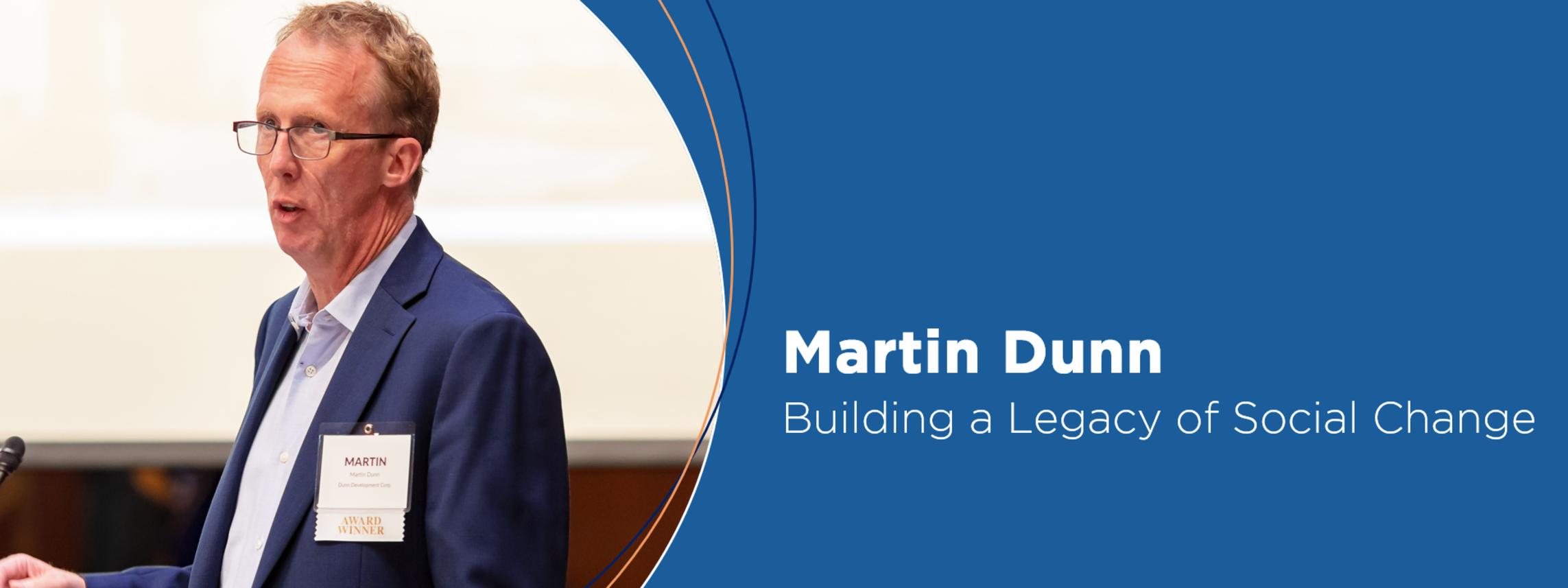
GPC Member Profile: Martin Dunn
Based in New York, Martin Dunn is a philanthropist and entrepreneur whose journey has been deeply shaped by both his professional ambition and a personal commitment to self-awareness and growth.
After founding Dunn Development Corp. to build affordable housing in his hometown, he made a bold transition to focus on global human rights through the Blue Sky Social Justice Fund. Throughout his career, Dunn has embraced the inner work of understanding himself better – acknowledging his evolving passions and learning to listen to his own needs.
This introspective approach has not only helped him navigate complex social issues with authenticity, but it has also strengthened his ability to lead with purpose and inspire trust. In this interview, Dunn looks back on his professional path, and the things that fuel his drive to make a difference in the world.
You were an activist and non-profit leader before you founded Dunn Development Corp. with the mission to create affordable and supportive housing in New York. What led you to make the switch?
I was always entrepreneurial since I was young and so combined with my commitment to social justice, a mission-oriented business was a natural fit for me. But specifically, I wanted to create new, more integrated models of supportive and affordable housing and at the same time elevate the quality of design and construction. And I realized private capital and entrepreneurship could spur and speed up innovation. And it worked. We’ve been extremely impactful and successful as a company.
How did you balance the roles of developer and philanthropist, particularly when those roles sometimes intersect in complex social issues?
As a mission and impact focused developer, that generally hasn’t been hard. In this field, doing the right thing can actually make the business more successful financially too. Many times I’ve advocated against the interests of developers when I thought it was the right thing. But in the long term that has benefited us too – it builds credibility with government and community partners. We almost always won competitive processes for sites and funding and we were always able to secure community support.
How did you decide it was the right time to transition from Dunn Development Corp. to focus on global human rights through Blue Sky Social Justice Fund?
I finally listened to myself. I wasn’t happy with my work and hadn’t been for years. Even though it was meaningful, I had lost the passion; it had become a burden I carried. So I put aside the worries and guilt and everything else about exiting. I was always spending a lot of time on global human rights but I was fitting it in around all of my obligations of running my company which were extensive. But I was visiting my activist friend Martin O’Brien in Belfast and he was sharing things he was involved with that he thought I would be interested in. And I thought, those are the things I want to spend all of my hours working on – not just the extra bits. And I made the decision right then and there to transition from Dunn Development. It was liberating.
The Blue Sky Social Justice Fund’s vision of giving is based on trust. What does that mean in practice, and do you have any lessons to share about building trust in philanthropy?
The first part of it is what you would think – trusting a grantee with the flexibility and freedom to accomplish their work. Multi-year commitments and limited restrictions and bureaucracy are important demonstrations of that. We’re funding an organization because we believe in their expertise and agency and our actions should reflect that. Trying to control demonstrates the opposite. The second part is getting a grantee to be open and honest with you. And that is the harder part, because of power imbalances and past experiences with donors. There are valuable things I bring to the table besides money, but if a grantee cannot be honest with me about when things go wrong, or whether my views or approach are wrong, we’re going to accomplish less.
There will always be power imbalances between a donor and grantee, but more authentic relationships foster more success. My advice is try it. Like anything else it takes work and practice. It won’t always be successful, but if success were assured in efforts to address the challenging problems we are all working on, the issues would all be solved already.
Your fund has made impact investments in underserved regions like Haiti, the Amazon Basin, and Southeast Asia. What criteria guide your choice of communities and projects?
We’re trying to have deep impact and be catalytic. Part of that is about investing money where others are not and taking risk. Haiti is an example which involves both. But we can afford to take risk and so we must – the situation there is dire and capital investments are critical in addition to donations. There are lots of reasons why not to, but if we focus only on that, we unnecessarily abandon our mission. I love the Marianne Williamson quote Peggy shared at the May gathering – “your playing small does not serve the world” – and I think of that often. Avoiding risk, playing it safe, holding back for the future, suppressing the immense hope and ambition I have inside of me – that is playing small to me. And I think, what am I waiting for? What can I do right now? My own urgency should match the urgency of what the world is facing. And that leads me to action.
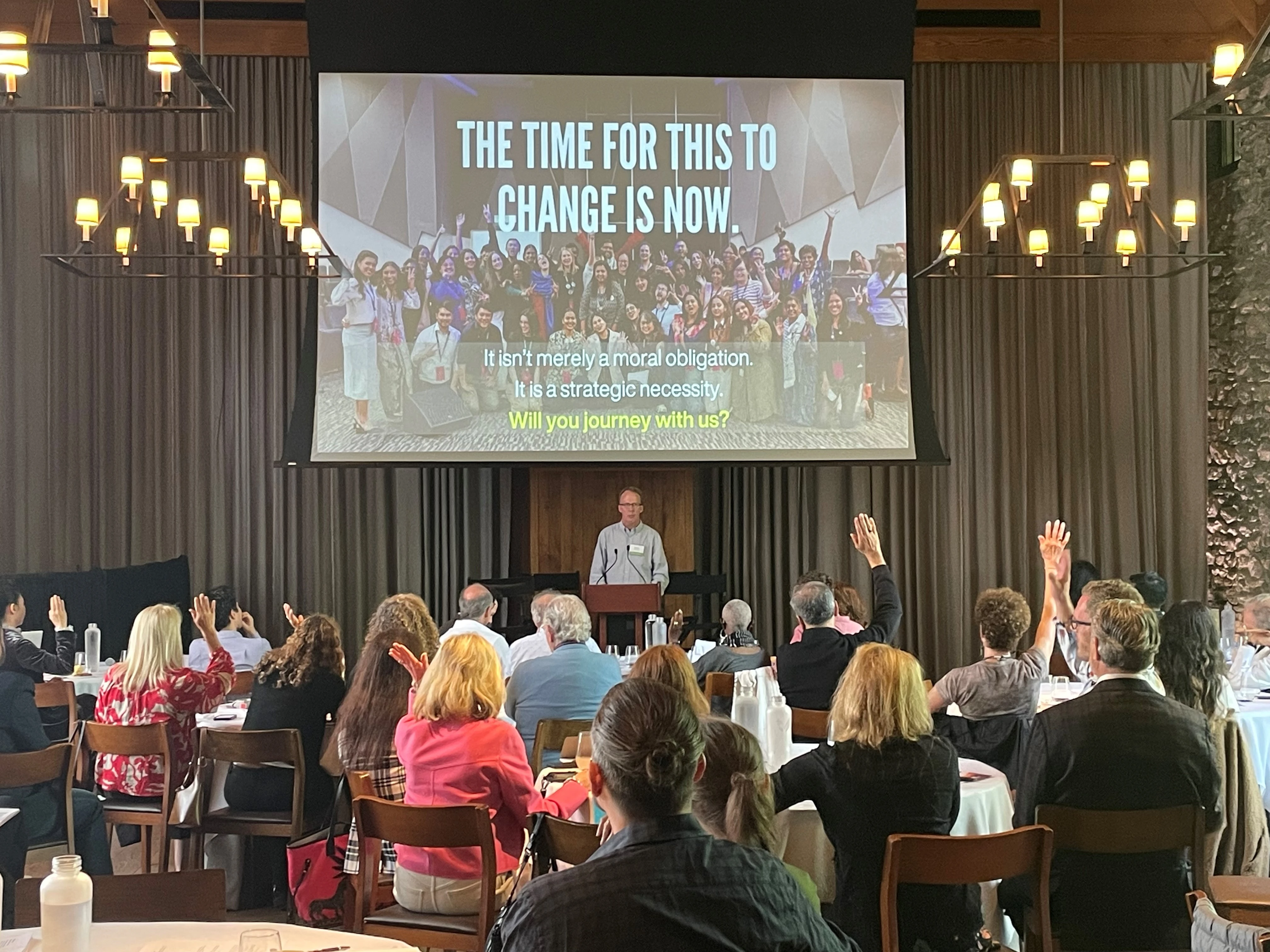
You also support the Global Statelessness Fund, which you presented during the May Synergos GPC Gathering. How was that moment for you?
It was a very emotional moment for me as those in the room witnessed. A number of people asked me afterwards why. It’s some combination of the travesty of the situation and the courage and resilience of the activists working to address it. Regular people coming together and fighting to overcome seemingly insurmountable challenges, often at great personal risk and sacrifice, always moves me.
The other amazing thing about that moment - stateless people are almost never in the room with those who have power and where decisions are made. Having a person who was born into multi-generational statelessness be there to speak and present to the GPC was significant.
What has the Global Statelessness Fund achieved so far, and what is your next goal?
It’s very exciting - just this month the Fund awarded the first cohort of grants; 22 organizations led by impacted persons in 16 countries are receiving 3 years of general operating support. We’ve raised more than $5 million for the Fund and are now focused on raising the approximately $900,000 remaining for the 3 year pilot. The peer learning and support and accompaniment components are all being developed and the participatory process for awarding the next cohort of grantees is getting started.
What’s the most exciting thing about your life right now?
That anything and everything is possible. That I have the good fortune and good health to be able to wake up every day and choose what I want to do and how I can make a difference. And I don’t have to do it how I did it yesterday. Also, I’m surrounded by a lot of people who inspire me, including my family.
Rapid Fire Questions
What advice would you give your younger self?
Be kind(er) to yourself. Practice forgiveness – to yourself and others.
What question do you wish people asked you more frequently?
How much do you want me to give?
Do you have any regrets that stand out in your journey?
Of course. One is the periods I worked too many hours and lost my center.
What gives you hope for the future?
I think hope is something innate inside of me. But witnessing courage and resilience nurtures it.
What never ceases to surprise you?
People’s creativity. It shouldn’t as it happens so often, but it still surprises me when a person comes up with something I never could have thought of.