
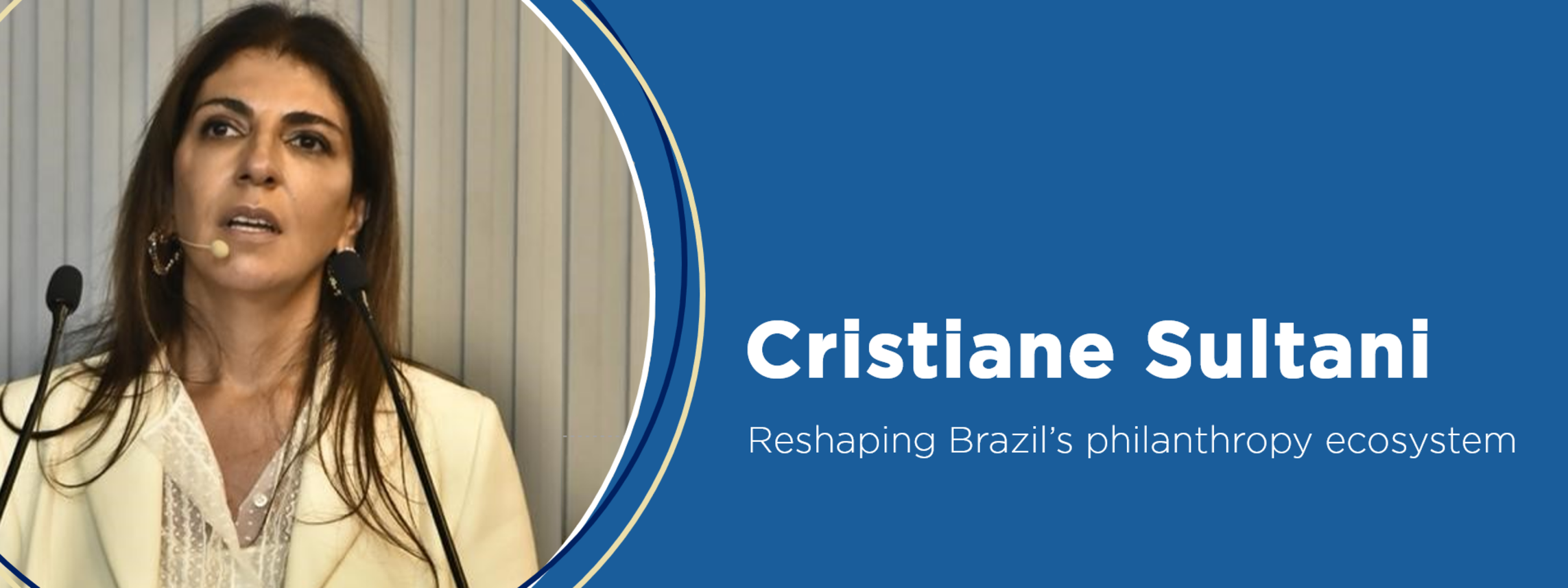
GPC Member Profile: Cristiane Sultani
Cristiane Sultani takes philanthropy very seriously. At the same time, it is clear that her approach to it is encircled by unconditional love.
As the founder of Instituto Beja, based in Rio de Janeiro, her work is not just a matter of personal motivation, but also a way to honor the legacy of her late husband, Pedro. Cristiane channels the values they shared – generosity, integrity, and care – into every aspect of Instituto Beja's initiatives. What sets her apart is that she isn’t attached to specific causes; rather, she is devoted to fostering systemic change through innovative solutions and bold advocacy.
Moved by her discontentment with social inequality in Brazil and backed by her experience as an attorney and banker, Cristiane was courageous enough to jump into philanthropy without previous knowledge of the sector. She recounts: “I was told by a friend not to do ‘more of the same’ of the work other Brazilian philanthropists were doing, but I didn’t even know what that was.” Today, she not only comprehends the current ecosystem and its limitations like few others do, but also shows an unwavering commitment to improve it.
Cristiane views her role as a philanthropist with the same seriousness as her previous careers in law and in finance, and is very hands-on in the way she manages Instituto Beja’s initiatives. Her goal is to co-create solutions and to transform Brazilian philanthropy by promoting collaboration, risk-taking, and innovation.
In this interview, she shares insights into the importance of trust, the role of technology in scaling impact, and how she hopes to reshape the philanthropic landscape in the coming years.
What inspired you to found Instituto Beja?
My journey with Instituto Beja is deeply personal. I am a lawyer and spent many years working in finance, but the real turning point came during a three-month sabbatical leave I took before joining a Brazilian law firm. It was then that I met Pedro. A colleague introduced me to him saying he was a very “distrusting” client – which isn’t unusual, because very wealthy people often want to protect themselves and their money. My firm asked me to work with him because they felt I was someone who inspired trust. Pedro and I connected not just on a professional level, but deeply through our shared values. We fell in love and got married a few years after.
Pedro came from a very privileged family. He was a person of immense integrity, and I was drawn to his outrage at the social inequality in Brazil. For Pedro, money was never a tool for power – it was something that needed to be multiplied and used efficiently to create impact. After he passed away, I felt a deep responsibility to carry on his legacy of integrity. Founding Instituto Beja in December 2021 was my way of honoring that legacy, while also channeling my own passion for gender equality and tackling domestic violence.
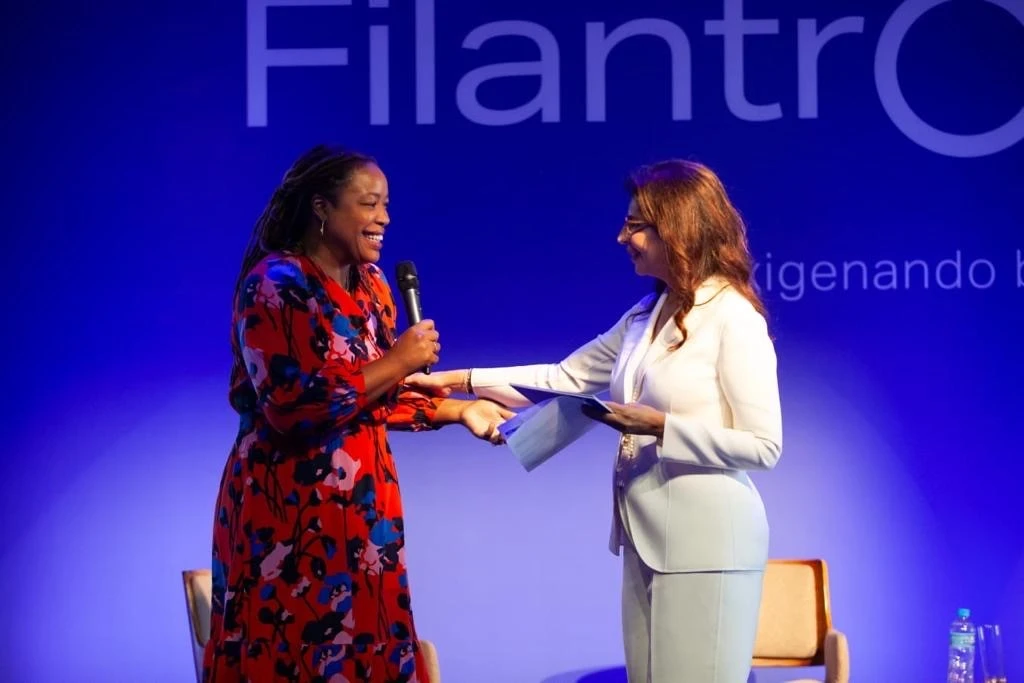
Beja, interestingly, was the name of Pedro’s dog – he didn’t want to name anything after himself, so we chose to honor him this way. The values Pedro and I shared – of generosity, of volunteering, and of caring for children, and issues like employment – still guide the institute today. We are also focused on shaping the philanthropic landscape in Brazil, particularly through advocacy efforts aimed at creating a more favorable tax system. In fact, our mission has evolved to include fostering collaboration across sectors, as demonstrated by Filantropando, a groundbreaking event hosted by us that will have its third edition next November 18, when we will gather stakeholders from NGOs, foundations, and businesses to discuss how to advance philanthropy.
For me, philanthropy is not just about giving money – it’s about giving yourself, your skills, your knowledge. That’s the philosophy I’ve carried into Instituto Beja. The moment I feel like my money is becoming a tool of power, I stop. I want our work to be about co-creating solutions, not dictating them.
Can you describe the key initiatives and programs Instituto Beja has launched to promote positive impact in philanthropy?
Since its creation, Instituto Beja has been committed to creating systemic impact by focusing on collaboration, advocacy, and research. One of our first major steps was forming an advocacy alliance to help NGOs gain tax exemptions, which is crucial for their sustainability. We are also working towards non-taxation of endowments, a vital issue for long-term philanthropic funding in Brazil.
We’ve also established democracy and climate change labs, which are spaces for research and dialogue around these critical issues. We’re fostering the ecosystem through these labs, where we bring together thought leaders, activists, and researchers to explore innovative solutions.
Our scope of work is broad – I am not attached to a specific cause. I am attached to the idea of combatting systemic problems.
As a philanthropist and impact investor, how do you see the role of technology and innovation in driving systemic change and solving complex social challenges?
Philanthropic capital is like venture capital – it’s there to serve society by driving innovation. I’m able to experiment and take risks in ways that traditional institutions often cannot. I’m constantly looking for new tools and technologies that can enhance innovation and make it more efficient.
Technology is essential for scaling solutions. Centro de Mudanças Exponenciais, one of our latest initiatives, was modeled after a similar initiative in India [called Centre for Exponential Change] and designed to foster innovation and scale social impact through technology. We’ve committed to an investment of 10 million reais over five years and we’re actively seeking matching funds to expand our reach.
We’ve partnered with organizations like Luminate to help ensure that the technology used in the social sector is safe and effective. You don’t need to be a grantee of Instituto Beja to benefit from the Center for Exponential Change — we’ve opened it up to anyone who is committed to using technology for social good. Innovation and the smart use of technology are in our DNA, and I think that, without them, we can’t truly solve complex social challenges.
Can you share some of the key lessons or insights you've gained from your experiences in wealth planning, corporate law, and the finance sector that you've applied to your philanthropic work?
I would joke with Pedro that he didn’t make smart investment choices – he put all his eggs in one basket. I’d ask him, “What classes did you miss? You should know better!” and he’d answer, “I missed all of the classes – I didn't go to college!” I believe that, if you don't take risks in life, you won’t achieve strategic goals. You won’t learn. It’s impossible to innovate without taking risks. Brazilian philanthropy is very risk-averse, and I want to change that.
You can be a very creative and innovative person if you train your mind to get out of your comfort zone. I want Beja to be disruptive, and for people to change their mindset about money – it should not be seen as a tool for power, but as a tool for the community.
I’ve also learned the importance of having a hands-on approach. I’m not the kind of philanthropist who writes a check and walks away. I’m actively involved in management, and I treat philanthropy with the same seriousness as I would any business venture. In fact, 50% of my inheritance belongs to Instituto Beja. And I’ve made the decision not to establish an endowment because I want to donate everything while I’m still alive.
What are some of the biggest challenges you've faced in mobilizing resources, fostering collaboration, and driving impact through the Beja Institute? How have you navigated those challenges?
One of the biggest challenges is leading by example. You can’t demand anything from people that you’re not willing to model yourself.
Trust is everything in philanthropy. For example, the grants we give at Instituto Beja are multi-year and institutional, and not based on projects. That’s because I believe in building long-term relationships with our grantees. There’s no institutional development without trust, and I need to trust the organizations we work with just as much as they trust us.
Where do you see Instituto Beja in 5-10 years?
I see Instituto Beja playing a key role in reshaping Brazilian philanthropy, particularly when it comes to risk-taking and forming partnerships. We want to foster a mindset that embraces innovation and collaboration.
I also see us continuing to prioritize long-term partnerships. It’s all about listening, trust, and open conversation. These are the three things we are prioritizing in the next few years. This way, when we see results, it’s not just about meeting a set of requirements but about building a lasting impact together.
What led you to join the Synergos GPC? How has this network influenced your approach to philanthropy?
My relationship with Synergos started with Peggy, and it’s one of deep trust. She introduced me to this incredible community of philanthropists, and I immediately felt like I had found a space where I could exchange ideas, learn, and grow. Silvia Morais [from the Brazil team] and I have also built a meaningful connection, as well as with the executives from Instituto Beja.
I’ve been on a few learning journeys with Synergos, including the latest GPC Gathering in New York and the Montana retreat. Both were very inspiring and eye-opening. Right now, we have three of our executives in Boston, participating in the Ayni Institute journey, which is a direct result of our connection with Synergos.
The network has really expanded my horizons and helped shape my approach to philanthropy in a more collaborative and systemic way. It’s about being part of a global community, learning from others, and bringing those insights back to Brazil to drive real change.
Rapid Fire Questions
Which living person do you admire the most? Jane Goodall.
What advice would you give your younger self? Do not change your feminine soul to get adapted to a job.
From where do you draw unconventional sources of inspiration? Curiosity and Listening.
What question do you wish people asked you more frequently? "How do you define risk as a philanthropist decision maker?"
What gives you hope for the future? It is too late to be a pessimist. My work drives me to hope.